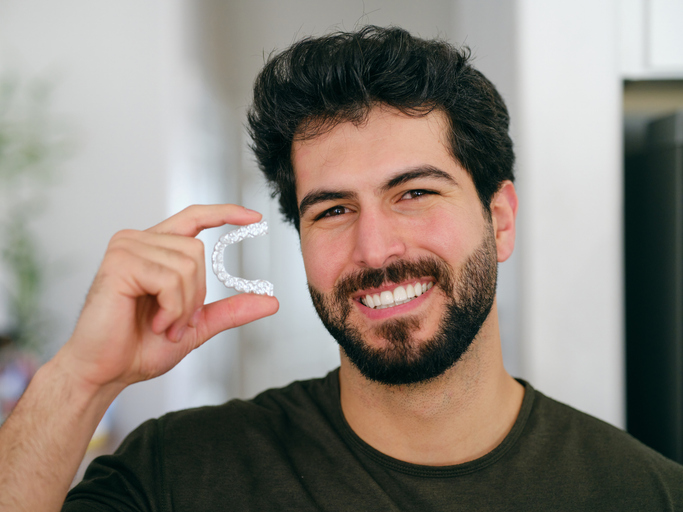
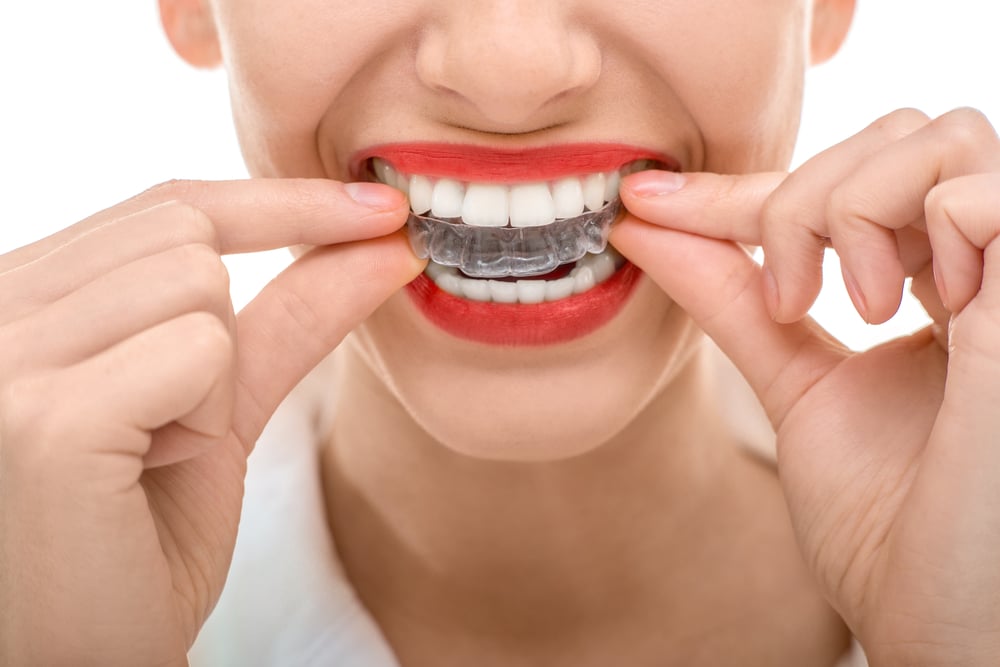
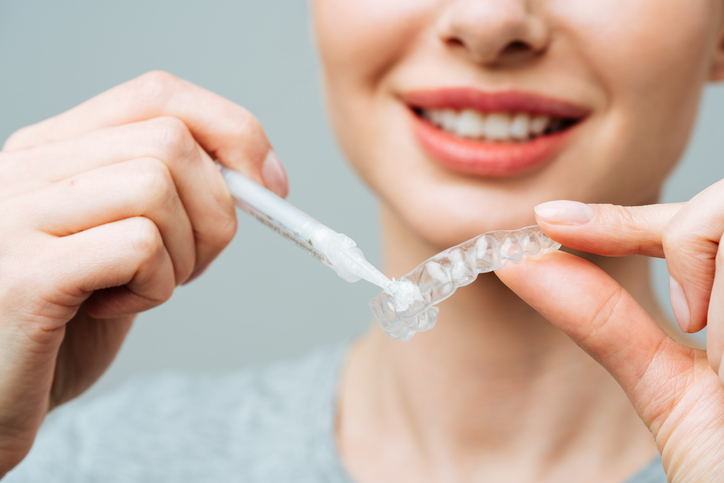
A young man holding a dental retainer. A retainer helps hold your teeth in place after braces are removed.
You spent months, maybe years, in braces. You did the work. And now your orthodontist hands you a retainer and says you need to wear it. Forever. It’s a lot to process.
We hear these questions constantly at Dental Partners of Boston, and they’re all fair ones.
How long do you actually have to wear a retainer after braces?
What happens if it breaks?
How do you keep it clean?
Here’s everything you need to know.
How Long Do You Have to Wear a Retainer After Braces?
The honest answer: indefinitely.
Teeth are not static. Even after braces finish moving them into the right position, the bone and soft tissue around your teeth need time to stabilize and set. Without a retainer holding things in place, teeth will begin drifting back toward where they started. This isn’t a failure of your treatment, it’s just how the body works.
In the first several months after braces come off, most patients wear their retainer full-time, meaning all day and night, except when eating and brushing. This is the period when relapse risk is highest and when the tissues surrounding your teeth are still reorganizing.
After that initial phase, you’ll typically move to nighttime-only wear. This is where most people land for the long term. Your orthodontist will guide you on the timeline based on how your specific case responded to treatment. However, a good rule of thumb is this: if you stop wearing your retainer completely, your teeth will move. It may happen quickly or slowly, but it will happen.
How Often Should You Wear Your Retainer?
This depends on where you are in the retention process.
Right after braces: Wear it as close to 24 hours a day as possible. Sleep in it. Keep it in during downtime. Take it out for meals and for brushing, but put it right back in.
After your orthodontist clears you for part-time wear: Nights only is the standard recommendation for most patients at this stage. Seven nights a week, not just when you remember. Skipping nights adds up fast.
Long-term maintenance: Many patients eventually reach a point where their orthodontist is comfortable with less frequent wear. Some go four to five nights a week for years without issue. But that decision should come from your provider, not from your own judgment about how stable your teeth feel. Teeth can shift without you noticing.
If you’ve gone weeks or months without wearing your retainer and you try to put it back in and it doesn’t fit – stop. Don’t force it. That’s your first sign that movement has already occurred, and forcing a tight retainer can do damage. Call your orthodontist instead.
What to Do If Your Retainer Breaks
A broken retainer is more urgent than most people realize. Every day without it is a day your teeth have an opportunity to shift.
Removable Retainers
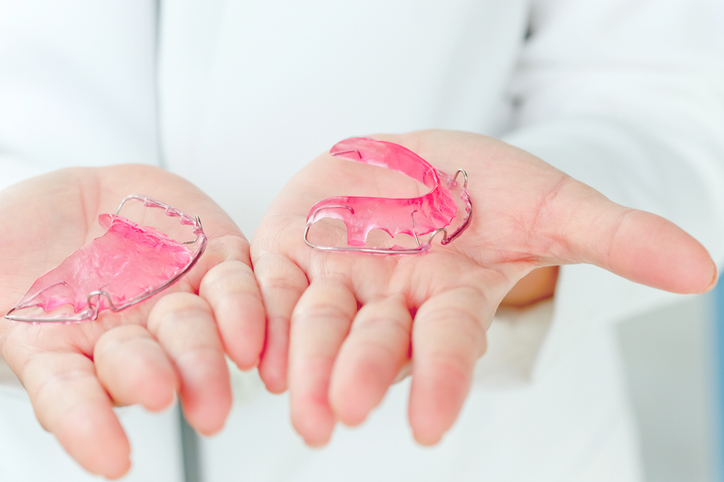
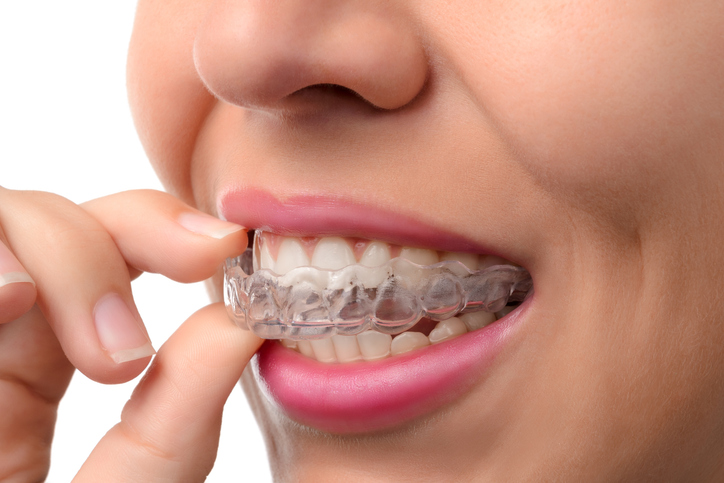
Hawley retainers (the acrylic-and-wire kind) and clear plastic retainers (Essix or Vivera-style) both break in different ways.
Dentist holding removable Hawley retainers.
A woman wearing orthodontic clear retainers.
If your clear retainer cracks, warps, or no longer fits snugly, it’s essentially no longer working. You can try wearing it carefully at night if it’s still mostly intact, but you need to contact your orthodontist to get a replacement made soon. Most offices can turn around a new clear retainer quickly.
If your Hawley retainer loses a wire or the acrylic cracks, the same applies, call your provider. Some minor wire bends can be adjusted in-office.
What you can do at home temporarily: If a wire is poking and irritating your cheek, you can use a small piece of orthodontic wax (available at any drugstore) to cover the sharp end and protect the tissue until you can get in to see your orthodontist. This is a quick fix, not a permanent solution.
What you should not do: use super glue, household adhesives, or DIY repair kits from the internet. These can introduce toxic materials into your mouth, weaken the retainer further, and make professional repair impossible.
Permanent (Bonded) Retainers
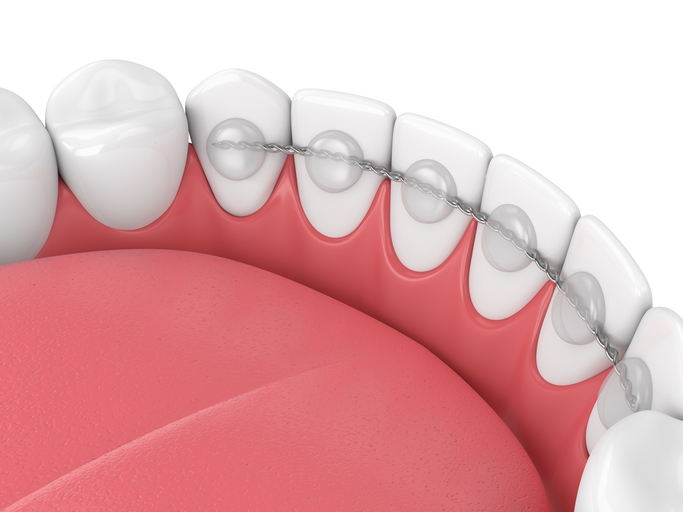
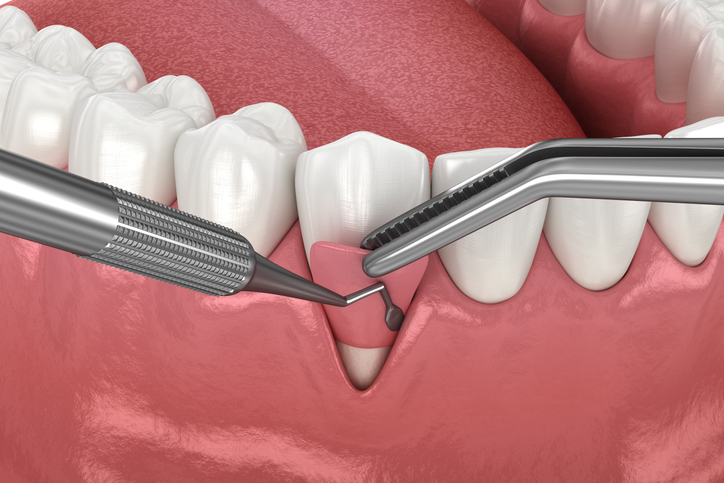
3d render of dental bonded retainer on lower jaw
A permanent retainer is a thin wire bonded directly to the back of your front teeth. You can’t take it out, which is both its greatest strength and the reason a break needs immediate attention.
If the wire comes loose on one side, shifts, or a bonding point separates from a tooth, you’ll usually feel it. You might feel a slight movement, an odd sensation against your tongue, or the wire catching on something. Don’t wait to call your orthodontist. A partially detached permanent retainer can actually cause teeth to rotate or shift faster than no retainer at all.
A broken permanent retainer cannot be fixed at home. Full stop. The repair requires bonding materials and technique that are only available in office. Call your orthodontist or dentist as soon as possible. In the meantime, avoid pressing or bending the wire, and watch what you eat. Sticky or hard foods can worsen a loose bond.
How to Take Care of Your Retainer
A retainer that’s well cared for lasts longer, fits better, and – critically – doesn’t become a source of bacteria buildup in your mouth.
For Removable Retainers
Clean it every day. Rinse your retainer with lukewarm water every time you take it out. Once a day, brush it gently with a soft toothbrush. Either plain water or a small amount of dish soap works well. Toothpaste is too abrasive and will scratch the surface over time. Tiny grooves will form where bacteria can hide.
Soak it regularly. A weekly soak in a denture cleaning tablet solution (like Efferdent or Retainer Brite) helps break down buildup and keeps it fresh. Don’t soak in hot water, it warps the plastic.
Keep it in its case. When it’s not in your mouth, it should be in a hard case. Not in a napkin (where it gets thrown away), not on the bathroom counter (where it gets knocked off), not in your pocket (where it gets broken). In the case.
Keep it away from heat. A clear retainer left on the dashboard of a car in summer will warp permanently. Same goes for dishwashers, boiling water, or leaving it in direct sunlight. The plastic has a low melting point by design so it could mold to the shape of your teeth. Heat changes that shape.
Bring it to your dental appointments. We can spot wear, small cracks, and fit issues you might not notice on your own. Better to catch a problem early than to need a replacement.
For Permanent Retainers
Flossing is the main challenge. You’ll need to thread floss under the wire using a floss threader or a water flosser. Skipping this step leads to tartar buildup behind the wire that, over time, can affect the health of those teeth and the gums.
At your regular cleanings, let your hygienist know you have a bonded retainer. They’ll take extra care around the wire and make sure the bonding points are still intact.
When to Call Us
If your retainer breaks, doesn’t fit the way it used to, or causes any discomfort beyond normal adjustment, reach out to us. Trying to fix it yourself almost always makes the situation harder to resolve professionally. In some cases, it means starting over with a new retainer.
The investment you made in orthodontic treatment is worth protecting. A retainer is how you protect it.
If you have questions about your retainer or your orthodontic care, our team at Dental Partners of Boston is happy to help. You can reach us at any of our three Boston locations – Charles River, Prudential Center, or Fort Point in Seaport.
Related Posts
Cosmetic Injectables in Boston: Why You Should See a Dental Specialist
August 26, 2026
Most people don’t think of a dental office when they’re looking for cosmetic injectables in Boston. That instinct is worth reconsidering. Dentists spend years mastering the anatomy of the face – the nerves, muscles, and bone structure that shape how you look and how you feel. That expertise doesn’t disappear when the appointment shifts from […]
Looking for a Dentist in Boston? Here’s Why Patients Choose Us.
August 25, 2026
BOSTON DENTISTS · NEW PATIENTS WELCOME If you’re searching for a dentist in Boston, MA, you have plenty of options – and not much time to try the wrong one. We’re Dental Partners of Boston, and for nine consecutive years, Boston Magazine has named our doctors among the city’s Top Dentists. Dental Partners of Boston […]
How to Get Rid of Tooth Pain (And What It’s Actually Telling You)
August 5, 2026
Tooth pain has a way of taking over your entire day. One minute you’re eating lunch, the next you can’t think about anything except the throbbing coming from the back of your mouth. If that pain is coming from a cavity, the answer isn’t to tough it out or stock up on ibuprofen. The answer […]
What the 10 Days After a Tooth Extraction Actually Feel Like
August 5, 2026
We tell every patient the same thing before they leave the chair: the instructions sheet we hand you is accurate, but it won’t prepare you for the emotional experience of recovery. So here’s a more honest version, day by day. Day 1: You Feel Fine. Don’t Trust It. The local anesthetic lasts for hours. Most […]
What’s Actually Bad for Your Teeth? Habits, Foods, and Care Mistakes Dentists See Every Day
July 24, 2026
You want to know what’s bad for your teeth, not a generic list, but a real explanation from dentists who see the consequences of these habits every day. Here’s what’s actually damaging your teeth, organized by category: daily habits, the foods and drinks you consume, and the ways people accidentally harm their teeth while trying […]
Can You Remove a Tooth at Home? Here’s What Dentists Actually Say
July 22, 2026
You’re in pain. It’s a Sunday night, the tooth has been bothering you for days, and somewhere in the back of your mind, a question surfaces: Can I just pull this thing out myself? It’s a surprisingly common thought, and an increasingly common internet search. People are asking AI assistants and search engines things like […]
Boston Top Dentist 2025: Dental Partners of Boston Recognized Again
June 5, 2026
Searching for the “best dentist in Boston” often means looking for more than a convenient appointment. Patients want experience, advanced technology, trusted specialists, and a team that can help them feel confident about every step of their care. To patients throughout Back Bay, Beacon Hill, the West End, Seaport, and downtown Boston, Dental Partners of […]
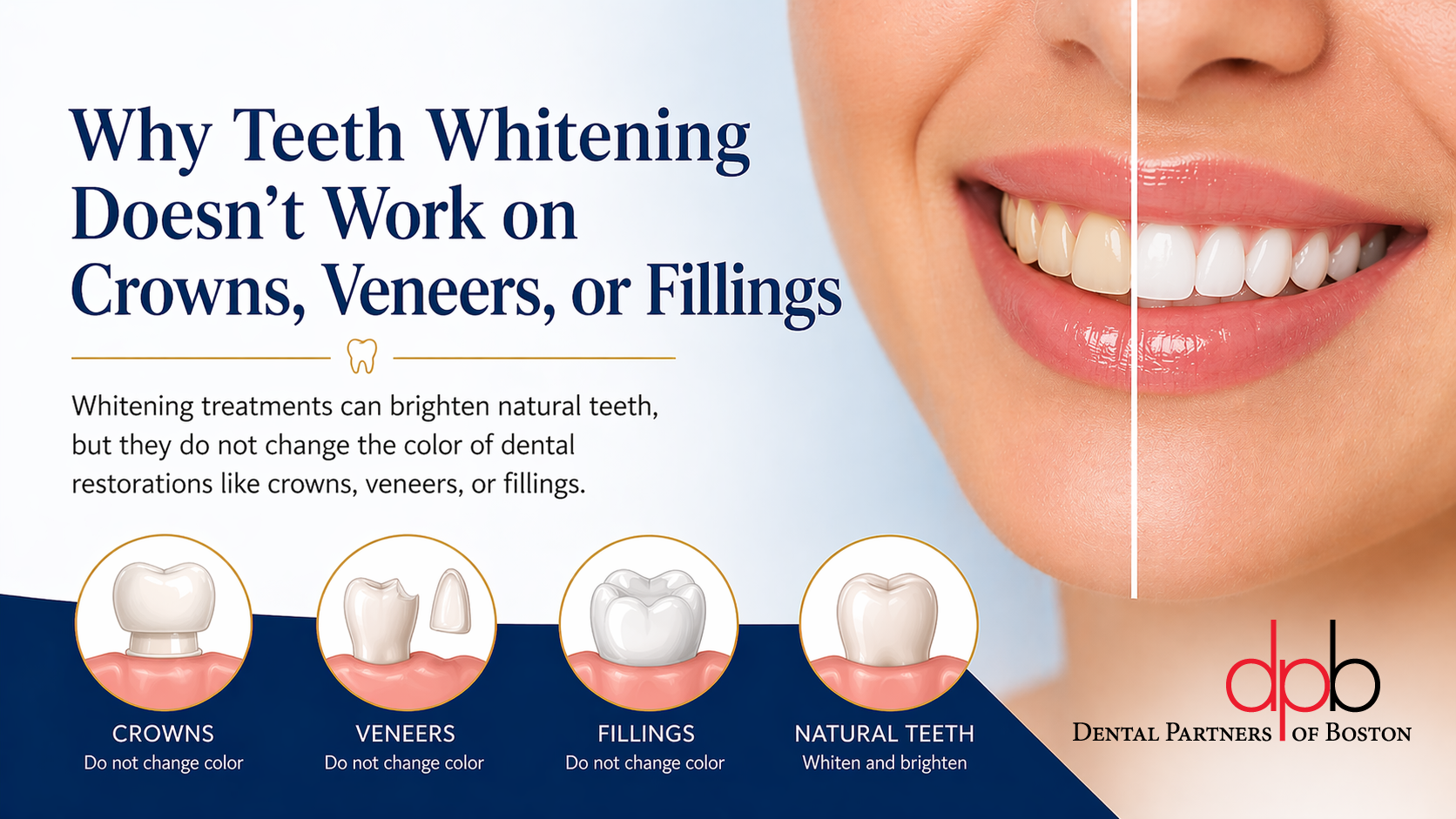
Why Teeth Whitening Doesn’t Work on Crowns, Veneers, or Fillings
April 21, 2026
A brighter smile sounds simple enough: whiten your teeth, lift the stains, and enjoy a fresher, more polished look. But many patients are surprised to find that after whitening, one tooth still looks darker, an older filling stands out more clearly, or a front crown no longer blends in the way it used to. That […]
Why Some Cosmetic Dentistry Results Look ‘Fake — and How to Avoid It
January 21, 2026
Cosmetic dentistry should never announce itself. The most successful smile enhancements don’t draw attention to the work; they draw attention to the person. Yet many people have seen cosmetic dentistry results that look artificial, exaggerated, or simply “off.” Teeth may appear unnaturally white, perfectly uniform, or mismatched with the rest of the face. These outcomes […]
Dental Care During Pregnancy: A Radiant Smile for Two
December 18, 2025
Congratulations! Pregnancy is one of the most exciting, transformative, and whirlwind journeys a person can experience. As you prepare for your new arrival, navigating everything from nursery colors to prenatal vitamins, it is easy to let your own routine healthcare slip to the bottom of the to-do list. However, there is one aspect of your […]
How Dental Veneers Can Make Your Face Look Younger
November 10, 2025
A bright, confident smile does more than enhance your appearance—it can actually make you look younger. At Dental Partners of Boston, our cosmetic dentists have helped countless patients rediscover their youthful glow through porcelain veneers. With three convenient locations in downtown Boston, MA—Prudential Center, Charles River, and Fort Point in Seaport—we offer Boston residents a […]
Restorative Dentistry in Boston, MA: Fixing Teeth, Restoring Lives at dpb
October 27, 2025
Your smile is more than just a feature — it’s how you connect, express confidence, and share joy. But when dental problems arise, even small ones can affect your comfort, appearance, and overall well-being. That’s where restorative dentistry comes in. At Dental Partners of Boston, our highly trained restorative dentists specialize in repairing and rejuvenating […]
Dentist ‘Tricks’ to Keep Your Smile Healthy This Halloween
October 24, 2025
Halloween is one of the sweetest times of the year—literally. Whether you’re helping your kids sort through their candy haul, passing out treats to trick-or-treaters, or indulging in a little chocolate yourself, it’s easy to get swept up in the fun. But all that sugar can take a toll on your teeth if you’re not […]
Snap-On Dentures Using Dental Implants: Boston’s Secret to a Secure, Confident Smile
October 24, 2025
If you’re missing most or all of your teeth, the idea of replacing them might feel overwhelming. Fortunately, the advanced option of snap-on dentures (also called implant-supported or implant‐retained dentures) brings a remarkable improvement in comfort, function, and confidence. At Dental Partners of Boston (DPB), with convenient locations at the Prudential Center, Charles River, and […]
*This post was updated on August 17, 2026 When most people think of cosmetic dentistry, they imagine brighter, straighter teeth and flawless Hollywood smiles. But cosmetic dentistry is about much more than appearances. At dpb (Dental Partners of Boston), cosmetic dental treatments are designed to improve both aesthetics and overall health, helping patients recover from […]
Dental Partners of Boston: A Trusted Boston Dental Clinic with Three Convenient Locations
September 25, 2025
Finding the right Boston dental clinic means choosing a team that offers comprehensive care, advanced technology, and highly trained specialists who can handle everything from routine cleanings to complex surgical procedures. At Dental Partners of Boston (dpb), patients benefit from a collaborative group of award-winning dentists who bring their expertise together under one practice. With […]
Top Gum Disease Myths Debunked: Facts About Prevention, Symptoms, and Treatment Options
September 17, 2025
Gum disease, also called periodontal disease, is one of the most common oral health issues worldwide. Yet misinformation keeps many from getting the care they need. These gum disease myths not only cause confusion but can also delay treatment—leading to serious consequences like tooth loss or health complications. In this post, we’ll uncover the most […]
Is It Really Important to Floss? Benefits You Didn’t Know
August 12, 2025
For decades, dentists have urged patients to “brush and floss daily.” While brushing gets plenty of attention, flossing often feels like the less glamorous—and more skippable—part of oral hygiene. Some people floss only before dental appointments (you know who you are), while others never pick up the thread at all. But is flossing truly that […]
Transform Your Smile with Confidence If you’ve ever wished for a brighter, more even smile, you’re not alone. Chips, stains, and gaps can make anyone feel self-conscious, but the solution is easier than you might think. Dental veneers can transform your smile in just a couple of visits. These ultra-thin, custom-crafted shells cover the front […]
If your dentist just mentioned that you need a crown, you probably have questions. What exactly is a dental crown? Why do you need one? Does it hurt? How much does it cost? And how long will it last? In this post, we’ll answer all of those questions and more—so you can walk into your […]
Boston’s Seaport District has rapidly evolved into a vibrant hub of innovation, culture, and commerce. Among its notable establishments is Dental Partners of Boston (dpb), recently featured on the official Seaport website. DPB’s is committed to excellence and its integral role in the community. Discover the Seaport: Boston’s Modern Waterfront Neighborhood The Seaport District, once […]
Your Search for “Dentists Near Me” in Boston Ends Here – dpb Is Accepting New Patients
June 24, 2025
If you’ve been searching for “dentists near me” in downtown Boston, your ideal dental home is closer than you think. With three convenient locations—Prudential Center, Charles River, and Fort Point in Seaport—Dental Partners of Boston is proud to offer expert, compassionate care right where you live, work, and play. And yes, we are currently accepting […]
Everything You Need to Know About Cosmetic Injections in Dentistry
June 18, 2025
At Dental Partners of Boston, we’re known for beautiful smiles—and not just because of teeth. More and more, patients are turning to cosmetic injections as a part of their overall dental aesthetic treatment. These safe and effective injectables are used to enhance facial appearance, relieve discomfort, and boost confidence—all under the skilled care of trained […]
Dentistry That Fits Your Life at dpb-Charles River Boston, MA
April 11, 2025
You’re up early for a jog on the Esplanade. You sip your favorite matcha latte from Tatte. Your weekends might include browsing Beacon Hill boutiques or meeting friends for brunch at Scampo. Life along the Charles River blends classic Boston charm with modern urban rhythm—and now, so does your dental care. At Dental Partners of […]
Back Bay Professionals: Refresh Your Smile on Your Break at dpb-Prudential Center, Boston
April 9, 2025
You’re powering through presentations, meeting clients at Eataly, catching up with your team over Blue Bottle Coffee, or taking a quiet moment in the Public Garden. Life in Back Bay moves fast—and your schedule is a finely tuned machine. But when was the last time you gave your dental health the same attention as your […]
Seaport Tech Professionals: Your Perfect Smile is a Lunch Break Away at dpb-Fort Point, Boston
April 1, 2025
You’re crushing code, closing deals, and navigating the dynamic energy of Boston’s Seaport District. Your days are packed, moving between your office near the waterfront, team lunches at hotspots like Tatte or Flour Bakery, and maybe after-work drinks at Cisco Brewers or Woods Hill Pier 4. You thrive on innovation and efficiency. But when was […]
Why You Should See Your Dentist Every Six Months — And Why Dental Partners of Boston in Seaport Is the Best Place to Go
March 22, 2025
When life gets busy, it’s easy to put off routine dental visits. But seeing your dentist every six months is one of the best things you can do for your dental — and overall — health. Dental Partners of Boston at Fort Point in Seaport makes it easy, convenient, and worthwhile to stay on top […]
Dental Anxiety: How We Help Patients Feel Comfortable and Safe
March 14, 2025
If you’ve ever delayed or avoided a dental visit because of fear, you’re not alone. Dental anxiety is incredibly common—and something we take very seriously at Dental Partners of Boston. Whether your fear of the dentist stems from a bad past experience, fear of pain, or just general discomfort, please know that we’re here to […]
Stop Hiding Your Smile: The Boston Cosmetic Dentistry Guide That Will Change Everything
January 31, 2025
Are you in your mid-30s, working hard in a mid- to high-paying job, and ready to invest in yourself—especially your smile? Living in Boston means there’s no shortage of professional opportunities and a lively social scene, but when you’re self-conscious about slightly misaligned or discolored teeth, it can hold you back from feeling your absolute […]
If you’ve ever wondered about the safety and purpose of dental X-rays, you’re not alone. Many patients have questions about how X-rays work, how often they should have them taken, and whether they’re safe. At Dental Partners of Boston, we want to provide clear, helpful answers to put your mind at ease. Let’s dive into […]
Navigating Dental Insurance in Boston, MA: What Patients Need to Know
January 23, 2025
Dental insurance can often feel like a maze—a complicated network of premiums, deductibles, waiting periods, and paperwork. For many Boston residents, the lack of accessible, straightforward options can make managing oral health seem daunting. However, understanding your choices and exploring alternatives to traditional insurance plans can help you stay on top of your dental health […]
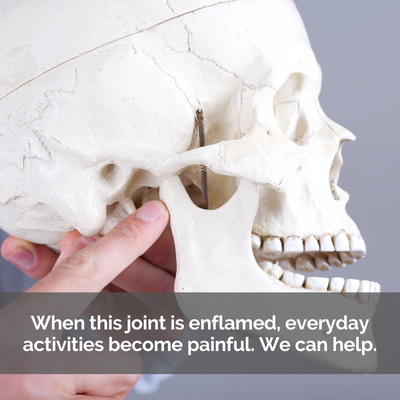
Temporomandibular Joint Disorder (TMD), commonly referred to as TMJ disorder, can significantly impact your daily life. This condition affects the temporomandibular joint, which connects your jawbone to your skull, allowing you to perform essential functions such as speaking, chewing, and yawning. When the joint is compromised due to stress, misalignment, or inflammation, it can lead […]
Plaque builds naturally in your mouth and, if not cleaned, hardens into tartar. If you don’t visit one of our Boston dentists to remove the tartar, it will continue to build and cause a myriad of problems in your mouth, including gingivitis. When gingivitis is not treated quickly, it progresses through several stages from simple […]
Do I Really Need a Root Canal? What You Need to Know
December 20, 2024
Hearing from a dentist that you need a root canal can be unsettling. Many patients immediately associate the procedure with pain or discomfort, but the reality is much different. A root canal is often the best way to relieve pain and save a tooth that would otherwise need to be extracted. At Dental Partners of […]
Top Dentists Boston Magazine 2024: Dental Partners of Boston
December 16, 2024
When searching for the “best dentist near me” or the “top dentist in Boston,” look no further than Dental Partners of Boston (DPB). For over 40 years, DPB has set the standard for comprehensive, patient-centered dental care. Recognized by Boston Magazine as Top Dentists every year since 2017, including 2024, DPB is renowned for its […]
What Is Prosthodontics and What Does a Prosthodontist Do?
November 18, 2024
When you hear the term “prosthodontics,” you might think it sounds like a specialized branch of dentistry—and you’d be absolutely right. But what does it actually mean, and what does a prosthodontist do? If you’re curious, you’ve come to the right place! Let’s dive into the world of prosthodontics, what it entails, and how prosthodontists […]
The Right Dental Specialist for Every Dental Need at DPB
September 30, 2024
At Dental Partners of Boston, we believe that every patient deserves personalized care tailored to their specific dental needs. Whether you’re looking for a routine cleaning, need advanced restorative work, or are considering cosmetic enhancements, we have the right specialist for you. Our multi-specialty practice ensures that you receive the best possible care from among […]
As a parent, you want the best for your child—including their smile. Straightening your child’s teeth not only improves their appearance but also enhances their oral health and confidence. Invisalign, a modern alternative to traditional braces, offers a discreet and effective way to help your child achieve a beautiful, aligned smile. At Dental Partners of […]
Losing a tooth is more than just a cosmetic issue—it can affect your ability to eat, speak, and smile confidently. If you’ve been searching for a permanent solution to restore your missing teeth, dental implants might just be the answer you’ve been looking for. But how do they work, and are they the right choice […]
Gum Disease: Symptoms, Prevention, and Treatment Options
August 22, 2024
Gum disease, also known as periodontal disease, is one of the most common oral health issues affecting adults. Left untreated, it can lead to severe complications, including tooth loss and increased risks to overall health. At Dental Partners of Boston, we believe that understanding gum disease, its symptoms, and how to prevent it is key […]
At Dental Partners of Boston, we understand how important it is to have a healthy, functional, and beautiful smile. Unfortunately, life can sometimes get in the way, whether through injury, decay, or other dental issues. The good news is that restorative dentistry offers solutions for damaged or missing teeth, helping patients regain their confidence and […]
Unlocking Your Best Smile: The Ultimate Guide to Brushing and Flossing
August 8, 2024
Maintaining excellent oral hygiene is more than just a daily habit—it’s the key to a healthy smile and overall well-being. At Dental Partners of Boston, we know that a clean, well-cared-for mouth isn’t just about aesthetics; it’s about your health. Brushing and flossing are the foundation of any good oral care routine. These practices help […]
At Dental Partners of Boston, we understand the profound impact a beautiful smile can have on your confidence and overall appearance. Dental veneers are one of the most popular and effective solutions in cosmetic dentistry for achieving a flawless smile. In this blog post, we’ll explore what dental veneers are, the benefits they offer, and […]
Maintaining good oral health is not just about having a beautiful smile; it’s also crucial for your overall well-being. At Dental Partners of Boston, our best dentists frequently encounter a variety of common dental problems that can affect people of all ages. In this blog post, we’ll explore some of these issues and discuss the […]
Understanding The Anatomy of Your Teeth and Their Supporting Structures: A Foundation for Oral Health
July 11, 2024
Understanding the intricate anatomy of the mouth and teeth is essential for appreciating the complexities and advancements in restorative and preventive dentistry. At Dental Partners of Boston, we believe that a well-informed patient is empowered to make the best decisions for their oral health. This blog post will go into the anatomy of the mouth […]
Bleeding gums can be concerning, especially when it happens during your daily dental care routine. While occasional bleeding might not be a cause for worry, frequent or severe bleeding can signal gum disease or other underlying health issues. At Dental Partners of Boston, we want to help you understand why gums bleed, the potential link […]
Prioritizing Preventive Dentistry: A Guide to Essential Services
June 5, 2024
Preventive dentistry forms the cornerstone of maintaining optimal oral health and preventing dental issues before they escalate. At Dental Partners of Boston, we are committed to empowering our patients with knowledge and providing comprehensive preventive dentistry services that encompass dental cleanings, oral exams, dental X-rays, and oral cancer screening. Let’s get into each of these […]
Why Implant-Supported Dentures Are Better Than Traditional Dentures
May 31, 2024
If you’ve ever struggled with traditional dentures, you know they come with their fair share of challenges. From the discomfort and the constant worry about them slipping out, to the maintenance and overall inconvenience, traditional dentures can sometimes feel more like a hassle than a help. But what if there was a better way to […]
At Dental Partners of Boston, we believe in a collaborative and comprehensive approach to dental care, especially for patients with complex needs or challenging cases. Our dynamic team combines the expertise of multiple specialists. Let’s explore why our dynamic team approach is ideal for patients requiring specialized care. Understanding Complex Dental Needs Some patients present […]
Dental Implants: 5 Reasons To Choose a Periodontist Over a Dentist
April 30, 2024
The Basics of Dental Implants Before delving into the importance of periodontists in implant placement, it’s crucial to understand how dental implants work. A dental implant consists of three main components: Why A Periodontist Should Place Your Dental Implant When considering dental implants, trusting a periodontist over a dentist can make all the difference. Here’s […]
Gum Disease: The Silent Threat and How To Combat It
April 22, 2024
Periodontal care is essential for maintaining healthy gums and preserving the foundation of your smile. At Dental Partners of Boston, we are dedicated to providing comprehensive periodontal services that address gum disease, bleeding gums, receding gums, and advanced treatments like LANAP laser gum surgery. Let’s explore each of these crucial aspects of periodontal care: Gum […]
4 Must-Have Preventive Dentistry Services Every Boston Dentist Should Offer
April 16, 2024
Preventive dentistry forms the cornerstone of maintaining optimal oral health and preventing dental issues before they escalate. At Dental Partners of Boston, we are committed to empowering our patients with knowledge and providing comprehensive preventive services that encompass dental cleanings, oral exams, dental X-rays, and oral cancer screening. Let’s delve into each of these vital […]
Gum disease, also known as periodontal disease, is a common but serious oral health condition that can lead to gum inflammation, tooth loss, and systemic health issues if left untreated. At Dental Partners of Boston, we are dedicated to helping our patients recognize the warning signs of gum disease and providing effective treatments to restore […]
Why You Should Schedule Regular Dental Check-Ups at Dental Partners of Boston
March 22, 2024
At Dental Partners of Boston, we prioritize your oral health and overall well-being. We provide preventive dentistry through regular dental check-ups, which play a crucial role in maintaining a healthy smile, preventing dental issues, and addressing any concerns promptly. Routine examinations help us identify potential problems such as cavities, gum disease, or oral cancer in […]
Dental veneers are a popular cosmetic dentistry solution for enhancing the appearance of teeth. Whether you’re looking to correct discoloration, chips, or gaps, veneers offer a versatile and effective way to achieve a brighter, more uniform smile. In this post, we’ll delve into the details of how dental veneers work, their benefits, the procedure involved, […]
A straight, confident smile can work wonders for your self-esteem and overall oral health. However, many people hesitate to pursue orthodontic treatment due to concerns about traditional braces’ appearance, discomfort, and inconvenience. Fortunately, Invisalign clear aligners are a discreet and convenient alternative for achieving a beautifully aligned smile. At Dental Partners of Boston, Dr. Frydman is proud to offer […]
When it comes to dental care, there’s more to it than just routine check-ups and cleanings. Dental Partners of Boston offers a comprehensive range of services, including both general dentistry and cosmetic dentistry, to cater to all your oral health needs. In this article, we’ll explore the key differences between these two branches of dentistry […]
6 Reasons Why Dental Implants Are Worth Considering
February 8, 2024
A confident smile speaks volumes, but missing teeth can often diminish that confidence. Thankfully, modern dentistry offers a range of solutions, with dental implants standing out as a remarkable option for replacing missing teeth. Dental implants not only restore aesthetics but also provide functional and long-lasting benefits. In this article, we delve into why getting […]
Achieve a Brighter, Whiter Smile with Professional Teeth Whitening
January 31, 2024
Are you looking to rejuvenate your smile and boost your confidence? Look no further than Dental Partners of Boston’s professional teeth whitening services. With our in-office treatments, you can achieve a dazzling smile quickly and conveniently, all under the expert care of our highly trained cosmetic dentists, and some of the best dentists in Boston. […]
Welcoming Dr. Iman S. Labib to Dental Partners of Boston
January 23, 2024
We are thrilled to announce the newest member of our team at Dental Partners of Boston, Dr. Iman S. Labib. With her wealth of experience, dedication to excellence, and passion for advancing the field of endodontics, Dr. Labib is set to make a significant impact on our practice and the patients we serve. Dr. Labib […]
What Does a Comprehensive Periodontal Exam Entail?
January 11, 2024
A comprehensive periodontal exam is a crucial aspect of oral health assessment that goes beyond a routine dental checkup. For the best dentist in Boston, here at Dental Partners of Boston, it involves a detailed examination of various aspects of the periodontium, which includes the gums, supporting bone, and other structures around the teeth. During […]
Mistakes to Avoid When Considering Dental Implants
December 14, 2023
Are you contemplating dental implants to restore your smile and oral health? Dental implants are a transformative solution for missing teeth and thus deserve serious consideration. There can be some pitfalls as patients think over their situation and wonder where to start and how to move toward making it happen. At Dental Partners of Boston, […]
We are thrilled to announce that the esteemed dentists at Dental Partners of Boston have once again been honored with the prestigious 2023 Top Dentists award from Boston Magazine, marking their consistent recognition since 2017. This accolade is a testament to their unwavering commitment to excellence in the field of dentistry. The Top Dentists selection […]
What Does a Comprehensive Periodontal Exam Look Like?
November 30, 2023
A comprehensive periodontal exam is a crucial aspect of oral health assessment that goes beyond a routine dental checkup. This is especially true when gum disease or periodontal disease is present. It involves a detailed examination of various aspects of the periodontium, which includes the gums, supporting bone, and other structures around the teeth. In […]
To our wonderful patients, we wish you a very happy Thanksgiving. Your trust in Dental Partners of Boston means the world to us, and we are truly thankful for the opportunity to be a part of your dental care journey. This holiday season, we reflect on the connections we’ve built and the smiles we’ve shared. […]
Introducing Our New Prosthodontist, Dr. Yuko Otsubo
November 15, 2023
Join us in welcoming the newest addition to Dental Partners of Boston, Dr. Yuko Otsubo, a highly skilled and compassionate dentist with a passion for creating beautiful smiles and fostering long-term relationships with her patients. With a diverse background and extensive experience, Dr. Otsubo brings a unique perspective to restorative dentistry, specializing in a range […]
We are thrilled to announce the launch of our brand new Frequently Asked Questions (FAQ) page, designed with your needs in mind. At Dental Partners of Boston, we believe that informed patients are happy patients, which is why we have curated a comprehensive FAQ section addressing a wide range of topics related to your dental […]
Your smile is a powerful tool – it can brighten a room, boost your confidence, and leave a lasting impression. At Dental Partners of Boston, we understand the significance of a radiant smile. We are dedicated to helping you achieve the smile that you want. Our range of cosmetic dentistry services, including Teeth Whitening, Veneers, […]
Leadership Qualities Transform Dental Care at Dental Partners of Boston
September 30, 2023
When we think of leadership skills, we often envision them in the context of corporate boardrooms or political offices. However, leadership qualities can be found in various professions, including dentistry. While it may not be immediately apparent, dentists possess an array of leadership skills that come into play when they treat patients. In this blog […]
When you flash a brilliant, confident smile, there are the skilled hands and compassionate hearts of Dental Partners of Boston that make it possible. Behind every one of our patient’s healthy smile, lie the expertise and dedication of our dentists. But what drives a person to choose this profession? Let’s see what our doctors all […]
When it comes to your smile, there’s no compromise. A healthy, confident smile not only brightens your face but also boosts your self-esteem. Dental issues, especially those requiring specialized care, can be overwhelming. That’s where prosthodontics comes in, a branch of dentistry that focuses on the restoration and replacement of teeth. At Dental Partners of […]
Invisalign is a popular orthodontic treatment that uses a series of clear, removable aligners to straighten teeth and correct various dental issues. Our orthodontist, Dr. Yael Frydman, recommends Invisalign for these reasons: 1. Aesthetic Concerns: Many people seek Invisalign treatment primarily for cosmetic reasons. They want to improve the appearance of their smile by straightening […]
Welcoming Dr. Inkyu Han: Elevating Restorative Dentistry
August 30, 2023
At Dental Partners of Boston, we are thrilled to introduce the newest addition to our team, Dr. Inkyu Han, a highly accomplished and dedicated restorative dentist. With his exceptional qualifications, unwavering commitment to patient care, and passion for dental excellence, Dr. Han is set to elevate the standard of restorative dentistry in our practice. A […]
Replacing Lost Teeth with Dental Implants – A Solution for Restoring Your Smile
August 17, 2023
In the previous post, we explored the implications of gum disease and the available treatment options to restore gum health. However, in some cases, advanced gum disease can lead to tooth loss. In this post, we will discuss what happens when one or more teeth are lost due to gum disease and introduce dental implants […]
Understanding Gum Disease Treatment and Restoration
August 4, 2023
In the last two posts about gum health, we explored the significance of gum health, the potential implications of gum disease, and preventive measures to maintain optimal gum health. In Part Three, we will delve into what happens when gum disease does develop and needs treatment. Understanding the various stages of gum disease and the […]
How to Maintain Optimal Gum Health and Preventing Gum Disease
July 29, 2023
In our previous post, we discussed the importance of healthy gums and how Dr. Guzman, our expert periodontist at Dental Partners of Boston, can recommend effective bleeding gum treatment for patients experiencing gum disease symptoms. Now, here are essential tips and practices to maintain optimal gum health and prevent gum disease from reoccurring. By incorporating […]
Healthy gums play a crucial role in maintaining your overall oral health. They provide a protective barrier around your teeth, helping to anchor them in place and safeguarding the underlying bone and connective tissues. Proper oral hygiene, regular dental check-ups, and cleanings are essential in preserving the integrity of your gums and preventing gum disease. […]
Collaboration with Dr. Frydman for a Beautiful Smile
July 12, 2023
At Dental Partners of Boston, we take immense pride in our team of experienced and passionate professionals, and Dr. Frydman is no exception. As our dedicated orthodontist, Dr. Frydman brings a wealth of knowledge and expertise to the table. Having completed rigorous training in orthodontics, she is not only well-versed in traditional braces but also […]
Dental implants continue to revolutionize the field of dentistry. Techniques for placement are continually evolving, and the long-term success rate is increasing as users with implants are able to keep them year after year without problems. A reliable and long-lasting solution to missing teeth, dental implants transform lives with natural-looking, functional, and confident smiles. A […]
Periodontology: Understanding the Key to Gum Health
June 8, 2023
Periodontology, a branch of dentistry, focuses on the diagnosis, treatment, and prevention of gum disease and conditions that affect the supporting structures of the teeth. Understanding periodontology is essential for maintaining optimal gum health and preserving a healthy smile. In this blog post, we will explore the field of periodontology, its significance, and how it […]
If you’re seeking a discreet and effective solution to address dental issues such as overcrowded teeth, misalignment, jaw pain, and gum problems, Invisalign might be the ideal orthodontic treatment for you. Invisalign offers a modern approach to straightening teeth and improving overall oral health. This blog post will explore how Invisalign addresses these common dental […]
Cosmetic Dentistry Enhances Confidence and Aesthetics
May 18, 2023
At Dental Partners of Boston, we believe that a beautiful smile is a powerful asset. If you’re looking to enhance the appearance of your teeth and achieve the smile of your dreams, our comprehensive range of cosmetic dentistry services can help. In this blog post, we’ll explore the distinction between general dentistry and cosmetic dentistry […]
Are you tired of living with gaps in your smile due to missing teeth? Dental Partners of Boston is here to offer you a life-changing solution – dental implants. We understand the impact that missing teeth can have on your confidence, oral health, and overall well-being. That’s why we highly recommend dental implants as the […]
25% of adults in America say that to boost their self-esteem, they would consider cosmetic dentistry to change their teeth or smile. This gives you a good idea of how important having a beautiful and confident smile is to many of us. Dental crowns and veneers help repair and protect your teeth as well as […]
At Dental Partners of Boston, we prioritize not only the aesthetics of your smile but also the overall health of your gums. If you’ve noticed your gums bleeding, it’s important not to ignore this symptom. Bleeding gums can be an early sign of gum disease, a condition that, if left untreated, can lead to serious […]
3 Reasons Why You Should Consider Cosmetic Dentistry
April 7, 2023
Are you tired of having a “less than perfect” smile? Well, the good news is that there are options out there to help you reach your smile goals! From teeth whitening to smile makeovers, dental bonding, dental veneers, and more, there are multiple cosmetic options to meet your unique needs. But, why should you consider […]
Preventive dentistry plays a vital role in preserving your smile and avoiding dental issues. At Dental Partners of Boston, we prioritize proactive care to ensure long-term oral health. In this blog post, we will highlight the dental problems that preventive dentistry addresses and the essential treatments involved. Discover how investing in preventive care can safeguard […]
5 Effective Gum Disease Treatments for A Healthier Smile
March 23, 2023
As a busy person with a busy life, you may not think about your gum health very often. Unless that is, you’re experiencing tenderness, swelling, or even bleeding gums. These are all signs of gum disease, or periodontal disease, which is one of the most common dental problems worldwide. If gum disease is a concern, […]
Benefits of Cosmetic Dentistry to Enhance Your Smile and Restore Your Dental Health
March 15, 2023
Cosmetic dentistry is becoming increasingly popular in recent years as more and more people seek ways to improve their appearance. At Dental Partners of Boston, we believe that everyone should feel proud of their smile. That’s why we offer many services that will help our patients achieve healthy and beautiful smiles. Positive Impact on Quality […]
At Dental Partners of Boston, we believe that excellence isn’t achieved by chance. That’s why we are dedicated to providing our patients with the highest standard of dental care possible. When you choose DPB, you can trust that you are in good hands. Our team of experienced dentists who have received awards for best dentists […]
Meet Dr. Guzman: The Periodontist at Dental Partners of Boston
February 22, 2023
Periodontics is a specialized field of dentistry that focuses on the prevention, diagnosis, and treatment of periodontal diseases, which affect the gums and supporting structures of the teeth. A periodontist is a dental specialist who has received additional education and training. We are proud to have Dr. Sergio Guzman on our team as our periodontist. […]
Endodontics is a specialized field of restorative dentistry that focuses on the treatment of dental pulp and surrounding tissues. The dental pulp is the soft tissue inside the tooth that contains nerves, blood vessels, and connective tissue. When the pulp becomes infected or inflamed, it can cause a range of painful symptoms, such as toothache, […]
It’s Valentine’s Day! The day to make a fuss over the ones you love. Romantic dinners, walks on the pier, sweet nothings shared in candlelight, perhaps. You’ve been planning the perfect date for weeks. Now that it’s here, the last thing you want to do is lean in for that good night kiss with bad […]
Here at Dental Partners of Boston, we have seven skilled prosthodontists who restore missing or damaged teeth. They are Dr. O’Toole, Dr. S. Kamachi, Dr. K. Kamachi, Dr. Park, Dr. Lau, Dr. Rivera-Zayas, and Dr. Kim. They help their patients regain the appearance and function of healthy teeth and gums. They also work to make […]
While it is commonly known that orthodontists provide treatments such as braces and Invisalign aligners, it is important to note that these professionals possess a wide range of skills to treat a variety of ailments. For instance, Dr. Yael Frydman and other orthodontists at Dental Partners of Boston offer treatments for the following issues. Misaligned […]
Invisalign vs. Braces: Which Adult Orthodontics Is Right for You?
January 21, 2023
If you missed the “braces train” when you were in middle school, you might wonder if it’s too late to get straighter teeth as an adult. Don’t worry—cosmetic dentistry has you covered! At Dental Partners of Boston, we want you to know that no matter if you’re in your 30s or 60s, it’s never too […]
Are you dissatisfied with how your teeth look? Do not despair. We have a great solution for you. You are going to find plenty of tooth restoration options when you visit us at Dental Partners of Boston. Our best dentists in Boston offer numerous prosthetic devices to correct your smile. What’s more, we help patients […]
We have many goals for this new year of 2023. Not only to grow our business, but to provide the kind of care that excels the expectations of our patients. We want to be the best dental providers in Boston for the wonderful people who come through our doors. We’re looking forward to greeting you […]
Invisalign is an excellent treatment protocol for teeth that are twisted, gappy, or otherwise mildly misaligned. The aligners are comfortable to wear compared to braces, but it can take a while to familiarize yourself with them. Here are a few top tips that might help. 1. Practice Speaking When you first receive your Invisalign aligners, […]
Tooth fillings are a common dental treatment for people of all ages. If you need a filling, you may be wondering what they are, what they do, what the procedure is like, and if it will be painful. In this article, we give you an overview of tooth fillings so you know what to expect. […]
Dental implants replace missing teeth. They feel and act just like natural teeth, letting you live life the way you want to. Oral hygiene is imperative to overall health – but it is often overlooked. People don’t find themselves in the dental clinic as often as they should. Infrequent visits to the dental office can […]
There are many benefits to maintaining good oral health, including preventing tooth decay and gum disease, reducing bad breath, and improving overall appearance. Taking care of your teeth and gums can also help to prevent other health problems, such as heart disease. A healthy mouth does lead to a healthy body! Begin with an appointment […]
It’s the holiday season. We’ve just enjoyed Halloween, our kids are still splurging on their trick-or-treating spoils, and all of us are looking forward to delicious food and desserts we only get to enjoy once every year. As we are among the best dentists in Boston, we have some thoughts about how to protect your […]
We’re so pleased to announce that Dental Partners of Boston has been awarded Top Dentist in Boston Magazine for another year in a row. The selection for Top Dentists is through a voting process. Thousands of dentists and specialists help determine who belongs on this list. The pool consists of dentists listed with the American […]
While we do our best to try and keep our teeth in tip-top shape with regular dentist visits and good dental hygiene, sometimes we still lose a few teeth as we age. This is where the best dental implants can be a lifesaver. A dental implant has many benefits when compared to dentures, which we’ll […]
3 Ways to Ease Stress and Prepare for Dental Surgery
September 27, 2022
Many patients feel anxious when faced with an upcoming dental surgery. Dental surgeries might include wisdom teeth removal, dental implants, surgery to improve TMJ (Temporomandibular Joint) disorder, or to prepare for dentures. Regardless of the type of surgery, there are many ways to prepare for the visit to help ease stress and ensure the procedure […]
For some people, eating and drinking hot or cold substances can cause significant discomfort, which often makes it difficult to enjoy certain foods and beverages and perform daily oral care like brushing and flossing. It is also important to come to see a best dentist in Boston regularly, like all of our great dentists at […]
Is It Common to Experience Pain After Getting Dental Implants?
September 13, 2022
If you are considering getting dental implants, you are probably worried about how painful the procedure is. Understandably, the idea of having screws implanted in your jaws can be intimidating. But there is no need to worry, as doctors try to make the surgery as pain-free as possible. Our Boston periodontist, Dr. Sergio Guzman, is […]
In this article, we explain what enamel is and give some expert tips on how to protect it. Your teeth are covered in a hard outer coating called enamel, and there’s a reason why it’s known as the hardest substance in the human body. Enamel is composed of calcium phosphate and other minerals that give […]
4 Ways to Avoid Cavities A Practical Guide for a Healthier Smile
August 24, 2022
Cavities are one of the most common dental problems in the United States, with over 90% of adults having had at least one in their lifetime, according to the Centers for Disease Control and Prevention (CDC). The good news? Cavities are preventable! By taking proactive steps, you can protect your teeth and maintain a healthy, […]
There are many reasons for tooth removal, and the causes are quite broad. Some teeth are removed because of dental cavities or other sources of pain and discomfort. There are also many solutions to replacing the missing tooth, such as dental implants or same-day dentures. But why remove a tooth in the first place? 1. […]
TMJ is an abbreviation for the temporomandibular joint that connects your jawbone to your skull. When it’s working the way it should, the complex joint opens, closes, glides, and rotates painlessly. It’s the joint that lets you chew your food and open and close your mouth when you’re talking, laughing, or using your face to […]
It may start as an annoying sensitivity or happen all at once when you bite into a favorite food, but one thing’s certain, dealing with a toothache is a pain! For some toothache sufferers, the temptation to ignore that sting or throb may be high if your schedule is packed. But take it from the […]
First impressions rely heavily on the way we look. We’re taught from a very young age to put our “best foot forward” when we’re meeting new people or trying to impress someone else. Your smile is an important part of that look, which means you’ll feel most confident when it looks bright, white, and even. […]
Welcoming Dr. Divya Bhargava to Dental Partners of Boston!
June 17, 2022
Here at the Dental Partners of Boston, we understand how important your dental health and appearance can be to your overall well-being, including your self-image. That’s why we work hard to be the best dentist in Boston for your dental needs, both in terms of creating and protecting a strong, even bite as well as […]
There’s something simple you likely do every single day, and it’s something so natural and ingrained that you may be doing it more than 1800 times a month: it’s smiling! June is National Smile Month, which is why our best dentist team at the Dental Partners of Boston wants to talk to you about your […]
Teeth can be broken by chewing on hard candy or ice. They can also be broken in an accident or sports injury. Fortunately, dental bonding is a procedure in cosmetic dentistry that provides a quick and inexpensive solution to chips, cracks, or broken teeth. What Is Dental Bonding? Dental bonding is a cosmetic solution to […]
The Dangers of Periodontal Disease and How You Can Prevent It
May 31, 2022
At first glance, gum disease, also known as periodontal disease, appears to affect your gums and teeth only. However, the effects of this condition go much further. Here is why periodontal disease is so dangerous for your overall health. What Periodontal Disease Does to Your Body Periodontal disease develops when your gums become inflamed from […]
Yes — professional teeth whitening can effectively remove many types of stains from teeth, especially those caused by foods, drinks, and aging. Whether you’re dealing with yellowing from years of coffee or discoloration from pigmented foods and beverages, professional whitening treatments can significantly brighten your smile. Why Do Teeth Get Stained? Daily habits such as […]
Dental implants are a modern, permanent, and effective solution to missing teeth. While some people still prefer to opt for bridges, dentures, or leaving a gap, there are important benefits of dental implants that you can miss out on if you choose an alternative. Here are some reasons why everyone missing one or more of […]
The best way to remove plaque from your teeth is to brush them with a toothbrush and toothpaste regularly, and of course to come see us at Dental Partners of Boston, among the best dentists in Boston. However, it is not always possible or practical to rush home and brush your teeth, or to carry […]
Does anxiety around dental appointments hold you back from seeking the dental treatment you need? Your worries might arise from thinking that the dental appointment might hurt. If it’s been a while since your last checkup, you might worry that your teeth are not healthy and that the dentist will say that you need a […]
Everyone loves the look of a perfectly white smile, but achieving that appearance can be tricky. Cosmetic dentistry provides the following tips to help you to not only make your teeth a little whiter but also to keep them that way. 1. Attend Regular Dental Checkups During a dental checkup, our dentists use tools to […]
We are encouraged to brush and floss daily and to see the best dentist for a cleaning and exam twice a year. It may seem like second nature to adopt these vital routines, but what are we actually doing when we brush, floss, and use mouthwash? What is the science behind dental hygiene? What are […]
All of us here at Dental Partners of Boston wish you a Merry Christmas and a Happy New Year! We wrap up 2021 with gratitude in our hearts for our wonderful patients. We’re passionate about what we do and work hard to achieve excellence in our services and results. We want to provide you with […]
Dr. Sarah Kim is a new prosthodontist at Dental Partners of Boston. What is a prosthodontist? A prosthodontist is a dentist who graduated dental school and then completed at least three additional years of advanced training and education in a prosthodontic program. They specialize in cases that require restoring missing teeth. Background Dr. Kim earned […]
Dr. Jose L. Rivera-Zayas is a great addition to our team made up of some of the best dentists in Boston. Join us at Dental Partners of Boston in welcoming him. Dr. Rivera-Zayas is a seasoned prosthodontist. Prosthodontists are dentists that have graduated from dental school and gone on to complete additional years of specialized […]
It’s Thanksgiving again – that wonderful time of year full of brilliantly-colored leaves, the return of the pumpkin spice latte, and cozy scarves. As the weather turns cooler and we gather together with friends and family, it’s the perfect time to spend a moment giving thanks. Personally, we’re filled with gratitude for the continuing success […]
Most people do not think of cosmetic injectables as dental procedures, but in fact, they can be a good solution for pain at the temporomandibular joint, also known as TMJ pain, as well as other facial conditions. What Is TMJ Disorder? TMJ disorder occurs when there is a problem with the joint that controls the […]
How Professional Teeth Whitening Will Give You Something to Smile About
November 11, 2021
Teeth whitening is not just for celebrities anymore. A brighter smile can boost self-confidence. In addition, professional teeth whitening services are safe, effective, and can show dramatic results. What kind of procedure is right for you? Dental Partners of Boston can provide answers. Find out more and make an appointment with our dentists. Why Teeth […]
Happy Post Halloween! How to handle all that candy.
November 1, 2021
Once again, it’s the scariest time of the year — and your teeth have good reason to be afraid! All that Halloween candy can increase your risk of developing cavities. However, there are things you can do to limit the effects of Halloween on your dental health. Here are a few useful tips. Schedule a […]
A broken or cracked tooth is a more common dental problem than many people think. Although human teeth are strong, they could break or fracture in the right situation. For instance, a tooth can crack or break due to an accident, tooth decay, or even biting hard objects. A broken tooth can cause pain or […]
Most people want whiter and healthier teeth to keep the smile they love looking perfect. For you to have whiter and healthier teeth, oral hygiene should be your priority. To achieve healthy and white teeth takes a lifetime of care. It is not something you do once, and you are good to go. Even teeth […]
Customized Dental Care: Tailored Solutions for a Healthier, Brighter Smile
September 29, 2021
Every smile is unique, and so are the needs that come with it. That’s why the days of cookie-cutter dental treatments are long gone. Whether you’re looking to straighten your teeth, brighten your smile, or protect your pearly whites during sports, customized dental care has solutions specifically designed for you. From Invisalign aligners to tooth-colored […]
Today’s dentures are designed to be comfortable and long-lasting, but that doesn’t mean they are indestructible. They are an excellent solution for various oral health issues. They can reduce pain and discomfort related to lost or damaged teeth and enhance your confidence in your daily interactions. However, over time, dentures that used to be comfortable […]
Reviews are important to any business, but for our periodontal office in Boston, reviews are vital to ensure that you—our customer—are happy about the procedure. At Dental Partners of Boston, we believe that our service is about you. Your needs are our main priority. We have an experienced team on board, including Dr. Sergio Guzman, […]
Invisalign® is a great solution when for adults who want to straighten their teeth. Traditional braces are always an option, but their unattractive appearance may be stopping you from seeking that beautiful straight smile you wish you had. They’re also difficult to keep clean and can be painful against your inner lips and cheeks. Invisalign® […]
Confidence is something that helps open many doors. It’s attractive to others because it shows you to be more capable. You carry yourself in a way that says, “I got this.” It’s in a natural, easy, bright smile that you don’t hesitate to show the world. It’s a common belief that self-confidence is something that […]
Good oral hygiene habits are vital in keeping your teeth and gums healthy. With neglect comes gingivitis, periodontal disease, discomfort, tooth decay, and eventually the need to extract teeth. Those patients who come to us needing intensive dental care to save their teeth sometimes have a long road of treatments and care to restore their […]
For many people, dentures are the ideal solution to replace missing teeth. Being able to depend on a beautiful smile and a functioning chewing surface can make life much better. However, it can take some time before patients are able to switch to permanent dentures. Additionally, they sometimes worry about how they’ll handle the transition […]
You Like Your Smile – But You Really Want to Love It
June 4, 2021
Have you ever considered how you can improve the look of your teeth? There are many kinds of toothpaste and mainstream products to help you to whiten the color of your teeth. However, the best thing you can do is invest in DPB’s teeth whitening in Boston instead. Whether your teeth are discolored from food […]
When it comes to needing medical advice or help, you want to visit a doctor you can trust. What sets Dental Partners of Boston apart from other practices is that we are a group of doctors working together and rely on the specialized training and experience each other brings to our practice. We give our […]
Most of us are trained to look after our teeth from a young age. We know that we should brush at least twice a day and limit our intake of sugary products. In this article, we dive into some of the facts about teeth, and the reasons behind why we look after them the way […]
Consider the first impression you make at work or when meeting new people. So much of that comes down to your initial smile and how confident you are sharing it. If you have stained or crooked teeth it’s understandable that you will be a little self-conscious, but that little moment can make all the difference. […]
There are several reasons why people might lose their teeth and require a dental prosthetic, like a crown or dentures in Boston. Gum disease is one of those reasons, another is broken or damaged teeth due to illness, age, or a sporting accident. A prosthodontist specializes in the field of dental prosthetics and is the […]
The removal of a natural tooth may be necessary following an accident or injury, sometimes following an illness. Many patient’s main worry with tooth removal is their appearance. They worry if the gap will show in their smile, affect their speech or their ability to eat certain foods. Luckily, when you have dental implants to […]
Being self-conscious about your smile is one thing that we at Dental Partners of Boston are determined to change. No one should feel like they have to hide their smile! Getting a perfectly straight smile might not seem possible, but thanks to Invisalign® invisible braces, we can help you smile freely again. How Invisalign® Aligners […]
Happy New Year! Happy new year! The year 2020 is now behind us, so what goals or resolutions are you making for the year ahead? Why not make 2021 the year where you set a goal to reach optimal dental health? One of the first things to do to start on the right track with […]
What do you get as a gift for the person that has everything? We all have some people on our holiday gift shopping list that are tricky to shop for. Why not give the gift of a beautiful smile this season? Here are a number of treatments that can be gifted to others, or to […]
The global pandemic has had a profound effect on the way dentistry is practiced. In March, the American Dental Association advised dental offices to close to help prevent the spread of COVID-19. The main form of transmission of the virus is through respiratory droplets from a person’s mouth or nose, and this put dentists, and […]
Gaps, Chipped Teeth, Dental Fractures, and How to Fix Them
December 8, 2020
With more people looking at options for cosmetic dentistry, and a new year coming up, there is no better time to improve your smile. At Dental Partners of Boston, our team understands the concerns you may have and are here to help. We want you to achieve the goals you have to improve your smile. […]
No one really wants to wear metal braces in this day and age, and especially as an adult. They can cause distress in your mouth and a lot of discomfort, and don’t look very appealing. But yet, many of us are still wishing for a perfectly straight smile. The one that can give us a […]
Modern technology is something that we can be so very thankful for. We are blessed with a range of things that can help our lives, that even twenty years ago we might not have thought were possible. As best dentists in Boston, we know just how much technology and education have progressed and helped the […]
Removable partial or full dentures require proper care to enjoy a great experience when wearing them. Keep them clean, free from stains, and comfortable to wear. If you want to make sure that your dentures last as long as possible, then here are some tips that will help you. We will also give you instructions […]
For years, Dental Partners of Boston has been striving for excellence in all aspects of its work. And this year, just like last, we’ve been recognized by Boston magazine’s Top Dentists™ 2020 under many winning categories — a tremendous achievement for our team. Boston magazine’s Top Dentists™ award has been running for many years. The […]
Teeth can become stained for various reasons. The main cause of teeth staining is certain food and drink, but medication and oral hygiene can also play a part as well. Some teeth stains can appear on the surface of the tooth, whereas others can appear underneath the enamel. Teeth whitening services are available here at […]
Dental Prosthesis: 5 Reasons to Replace Missing Teeth
September 24, 2020
There are many different reasons why people suffer from tooth loss. For example, tooth loss can happen as a consequence of gum disease, or because of an injury or trauma. If you have gaps in your smile, there are different solutions available to you here at Dental Partners of Boston. A dental prosthesis is an […]
Periodontal disease, which is also known as gum disease, is something a lot of people around the world experience today. Gum disease is an infection of the tissues that keep your teeth in place and develops usually as a result of poor dental hygiene. Bad habits of not brushing and/or flossing is a straight road […]
Teeth Whitening for a Strong, Beautiful, White Smile
August 27, 2020
Have you noticed that your teeth have become a yellowish color, or that they have stains? This can happen over time, and it can negatively affect a person’s confidence. We often say that the first thing we notice about another person is his or her smile, but what if your smile doesn’t present the good […]
A smile is an important thing. when we smile, we look more approachable, feel happier, and make those around us feel more positive. A smile is contagious. Helping people with their smiles is why our orthodontist, Dr. Yael Frydman loves her job and recommends Invisalign® aligners. “I love orthodontics. I think it’s the ‘happy specialty.’ […]
Dental veneers are specially designed, natural-looking tooth coverings that can be attached to the front of your teeth to improve the aesthetic appearance of your smile. Dental veneers are made from either porcelain or a resin-composite and bonded permanently to the teeth. They offer a long-term solution to stained, damaged, or unsightly teeth. As we […]
Consider Invisalign In Your Journey for a Beautiful Smile
July 29, 2020
When it comes to achieving a picture-perfect smile, it’s easy to feel like your teeth are inadequate. This is especially true if they aren’t as dazzling white or perfectly straight as those you see all over social media. As a result of this, it’s easy to struggle with your self-esteem and feel uncomfortable about your […]
At Dental Partners of Boston, we pride ourselves on being able to service all of our patients’ dental needs. Our team of highly experienced dentists and specialists in several specialties have been named Top Dentist by Boston Magazine. This list is carefully curated and includes general dentists and specialists. No matter what your needs are, […]
For all the wonders of modern dentistry, one of the biggest challenges dentists face in 2020 is trying to soothe those who feel unable or uncertain about receiving dental treatment. Many believe that certain dental problems are simply issues they must live with, lest they have to encounter extensive reconstructive work. But the truth is, […]
The world of dentistry has made massive strides over the last twenty years. We provide highly successful services such as adult orthodontics that have beautiful, long-lasting results. We continually add top talent to our team of experienced dental professionals so our clients get the results they seek. For this reason, we have been nominated Top […]
Ask anyone what the most notable signs of healthy teeth are. Undoubtedly, they will mention a bright smile and white teeth. This is because white teeth signify good oral health and contribute to how attractive our smile is to others. A beautiful smile is often taken as a visual impression of good health. Feeling able […]
Ask the average person what they think of dentures and most would likely tell you that dentures are for the elderly, but this is not true. For certain, the elderly are the primary users of dentures, but there are other segments of people that use dentures. For example, people who have suffered an injury or […]
Receding gums is a condition where your gums pull back from the tooth surface. This causes the root surface of your teeth to be exposed. This form of gum disease is a serious consequence of poor oral health, which may lead to tooth loss. Receding gums has a number of causes, including aggressive brushing over […]
Restore Your Smile with a Full Mouth Reconstruction
May 30, 2020
Have you ever had a bad day and were in your worst mood, but then you felt joy when someone made you laugh? Or suddenly grinned back at someone smiling at you? Smiling is contagious. When you smile, your brain releases endorphins, neuropeptides, dopamine, and serotonin, which lowers your heart rate and blood pressure, decrease […]
Proper dental care for your teeth and gums can prevent health problems and prevent serious and painful dental treatments. If you are seeking gum disease treatment, prevention, and control, please contact us at Dental Partners of Boston. What is Gum Disease? Bacteria naturally occur in the mouth, but an overgrowth can lead to tooth decay, […]
Gum Disease Prevention: Teaching Kids Good Oral Hygiene
May 6, 2020
As a parent, you want the best for your child in terms of their health, including their oral hygiene. But you might be unsure of how to help your child learn to care for their teeth. Don’t worry, we’ve got tips and strategies that’ll help you ensure your child develops good oral health and hygiene […]
We realize that finances play a role when we recommend dental implants as an option to replace missing teeth. Implants are the ideal solution because they feel and function just like a regular tooth. It’s essential to keep the bone structure healthy as well, which an implant will ensure, unlike other tooth replacement options such […]
Do you want to find out more about bone grafts and how they help your oral health? In this blog post, we’ll look at the different types of bone grafts and why you may need it when getting a dental implant. What Are They And Why Do You Need Them? A bone graft is a […]
Regular dental checkups and oral exams are essential for good overall health and well-being. Far too many people put off their dental visits for long periods of time. Here is a look at the thorough oral exams we offer at Dental Partners of Boston. Our team of highly dedicated and conscientious professionals will take great […]
The Connection Between Gum Disease and Heart Disease
March 27, 2020
Gum disease – also known as gingivitis or periodontal disease – is a common dental problem that affects as many as 50% of adults. Aside from pain, sensitivity, and discomfort, gum disease may cause bad breath, bleeding, and swelling of the gums. If left untreated, gum disease can also cause tooth loss. Gum disease presents […]
Should you have a cavity or broken tooth, you might know it is there because you might be able to see it or even feel it with your tongue. It may be tender to touch, and it will be rough across the surface. Sometimes you can smell a cavity on your breath. When you notice […]
There are several foods that you need to avoid to make sure that healing goes smoothly after having your wisdom teeth removed. For example, chewy snacks or candy, crunchy granola, and other foods that might poke into the extraction site. Before you come in for the extraction, you should have your kitchen stocked with soft […]
Cracked or Chipped Tooth? Here’s What You Should Know
February 28, 2020
Even though tooth enamel is the hardest substance in the human body, it’s not invincible. From unexpected accidents to everyday wear and tear, teeth can crack or chip in many ways. Fortunately, modern dentistry offers a variety of solutions to restore your smile, both functionally and cosmetically. At Dental Partners of Boston, we help patients […]
Many of us grind our teeth occasionally, often at night, when we may not be conscious of it. The term for this behavior is bruxism. Infrequent bruxism, the grinding of your teeth, is not usually something that requires a visit to your dentist. However, if you grind your teeth excessively, it can cause headaches or […]
At Dental Partners of Boston, we’ve seen firsthand the life-changing impact that dental implants can have on patients. Dental Implants are a wonderful way to replace missing, broken, or damaged teeth and restore confidence to your smile. They look like real teeth and feel natural. They are also incredibly long-lasting and durable. But there is […]
There are so many different dental treatments available for people today. It can almost seem impossible to know where to begin when it comes to selecting the right dental treatment. Luckily, you have experienced dentists who will assess the damage and make their expert recommendations. However, you may want to know why we recommend a […]
Your teeth go through a lot, and so do your gums. It is important to take care of them so they stay healthy and strong throughout your life. Dental Partners of Boston has the team, technology, and experience needed to treat all stages of periodontal disease. We can help you through these times of gum […]
Have you got existing dentures? Maybe you are considering getting some soon to resolve a few dental issues? During your research on the subject of dentures, you may have come across the term “denture reline.” You may also be wondering whether this is likely to apply to you. This post talks about denture reline treatment […]
Your smile is one of the first things a person notices about you. It brightens your countenance and represents a portion of your personality. Your teeth are crucial for chewing, of course, but they’re also an aesthetic factor. If you feel less than confident about your smile, you can contact us to schedule a consultation […]
Do you ever notice blood in the sink after brushing your teeth? It can be alarming, but it’s a common issue that many people overlook, assuming it’s just a sign of brushing too hard. However, if you notice bleeding gums frequently, it might be a sign that your gums need some extra care. Let’s explore […]
Which Condition Is The Earliest Stage of Periodontal Disease?
December 26, 2019
Periodontal disease, commonly known as gum disease, is a term that covers a range of conditions linked to inflammation of the tissues surrounding your teeth. It is a condition experienced by millions of people and can lead to severe issues. Some of these include lost teeth and infections that spread to other parts of the […]
Unfamiliar terminology can cause fear in patients ahead of their dental treatments. For this reason, it is a good idea to familiarize yourself with some terms to settle your nerves regarding potential dental work. LANAP is a term that you may have encountered if you are facing gum disease treatment. So what exactly does it […]
How Long Does It Take The Hole To Close After A Tooth Extraction?
December 2, 2019
Adult teeth should last you through your entire adult life. Unfortunately, for some, there are instances when a tooth needs to be extracted. Although the extraction of a tooth is generally the last thing we want to do, sometimes, it’s unavoidable. When a tooth is extracted, there is a space in place of what was […]
As is the case with any other field of healthcare, dentistry can be split into many different categories. Endodontics is a specialty that only 3% of professional dentists are qualified in. But what does an endodontist actually do? How can endodontics support you in greater control of your oral health? What Endodontics Is Endodontics focuses […]
What Is the Difference Between Plaque and Calculus?
November 19, 2019
Plaque and calculus are two terms you will almost certainly encounter when talking about oral health and general dentistry. Despite the fact that they both relate to bacteria growth on teeth, using the two terms interchangeably isn’t quite accurate. So, what is the difference between plaque and calculus? Here’s all you need to know. What […]
To prevent the buildup of tartar, otherwise known as calculus, it is vital to brush, floss, and rinse using an antiseptic mouthwash. In this blog post, we are going to reveal everything you need to know about tartar, including what it is and how to remove it. What Is Tartar? No matter how well you […]
Dental emergencies can be stressful and can be very painful. With Dental Partners of Boston, we treat your dental emergency quickly and thoroughly. The sooner you can act, the better your chances of preventing more serious, long-lasting, or permanent issues. Dental Partners of Boston has a team of dentists of various specialties ready to treat […]
There are many options out there for patients who have lost their teeth. Replacing lost teeth isn’t what it was…thankfully! There was a time when wooden dowels were hammered into place (we’re talking hundreds of years ago). Now, we have the options to choose removable dentures or dental bridges. These options are less expensive, especially […]
There is nothing worse than having to deal with a dental emergency and trying to find a dentist outside of office hours. With our emergency dental in Boston, you will get help with a chipped, cracked, or lost tooth without having to wait for hours. We can help you with emergency dental surgery, abscesses, and […]
Massachusetts Governor and Department of Health Declare Public Health Emergency
October 11, 2019
At Dental Partners of Boston, we recognize that oral health and overall health are intricately linked. As health care providers, we strive to educate our patients on better health practices across all aspects of their lives. At this time, we want to share the recent disturbing news regarding the use of e-cigarettes and vaping, the […]
Reversing Gum Disease with LANAP: The Gentle, Modern Alternative to Traditional Surgery
October 2, 2019
At Dental Partners of Boston, we’re always looking for ways to make your dental care experience more comfortable, more effective, and more aligned with the latest technology. One of the most exciting advancements in periodontal care today is LANAP, or Laser-Assisted New Attachment Procedure. If you’ve been diagnosed with gum disease—or suspect you might be […]
Editor’s note: This post was originally published in September 2019 and has been updated for 2020. At Dental Partners of Boston, we take great pride in our work. We, the dentists, our clinical team, and our administrative team, seek to satisfy our patients in all we do. We are delighted to share that we have […]
A partial denture is an option if you lose one or more teeth. Whether you have teeth extracted or they are knocked out, replacing them with prosthetic teeth helps you restore your smile. There are various options available to you, including a dental bridge or dental implants. Unlike implants and fixed bridges, a partial denture […]
Living with bleeding gums isn’t pleasant. It’s something that you need to address to prevent the bleeding and possible infection from becoming severe. Bleeding gums are almost always a sign of gingivitis, which is an infection and inflammation of the gum tissue around the teeth. In gingivitis, bacteria attack the lining of the gums and […]
While most patients benefit from having individual teeth removed and replaced with dental implants and crowns, for some, that might not be enough to fully restore health and function. There are situations in which a patient isn’t just missing a single tooth and may need more involved treatment. Extensive tooth loss can result from […]
What Is Scaling and Root Planing? Scaling and root planing, also called deep cleaning, is a non-surgical treatment for gum disease. Using specific instruments, a dental hygienist deep cleans the tooth root below the gumline. The root surface is also smoothed by removing tartar so the gums can heal. If untreated, gum disease can result […]
Why Do We Have Wisdom Teeth? Wisdom teeth are frustrating for many patients – they are a regular source of pain and infection. But if they are so problematic, why do we have them? It seems strange that evolution would give us teeth that are problematic and not necessary. Researchers believe that the reason modern […]
Periodontal disease can occur due to a number of factors, even in children. Generally, periodontitis begins with plaque buildup. Plaque is a sticky substance that develops when bacteria mix with carbohydrates (sugary and starchy foods). Plaque eventually hardens and turns into tartar. Both plaque and tartar cause the inflammation reaction in gums that leads to […]
How Gum Disease Develops and Affects Women Gum disease usually develops due to plaque building up around your teeth and gums. With women, however, there are particular stages of your life that can particularly impact the health of your teeth and can result in the development of gum disease: Puberty Hormones begin to increase, therefore […]
Research shows that gum disease affects a larger amount of men than women. This might be a result of fewer visits to the dentist or because they are more prone to dental plaque. In any case, it’s important to notice symptoms of gum disease and to contact us for a consultation. Gum disease is a […]
Without enough bone support, a dental implant would likely fail and potentially cause other problems. A sinus lift is a procedure to increase the amount of bone on a person’s upper jaw to make dental implants possible. It is a surgical procedure to correct bone loss and move the sinus up to make room for […]
All kinds of accidents can happen at home, work, sports, and while you’re on the go. Some of these accidents might impact your teeth. It’s important to know what to do and how to respond if you do find yourself dealing with an unexpected dental emergency. Acting fast and taking the right steps can have […]
Temporomandibular joint (TMJ) disorder affects millions of people in America. It manifests itself in the form of jaw pain. However, there are lots of ways in which the TMJ can impact your body, and it often goes far beyond jaw pain. Many symptoms associated with TMJ disorder can be very damaging and can limit a […]
Imagine the crisp, refreshing bite of an apple, or biting into fresh, sweet corn on the cob, or the salty and crunchy satisfaction of your favorite nuts. For those with dentures, these foods may be a distant memory. Luckily, there’s an alternative to dentures that can bring back the satisfaction of these foods and many […]
Dental crowns are an effective restorative treatment for teeth that have been damaged or worn down as a result of an injury, dental decay, or infection. If you have a dental crown, it’s important to look after it well to prolong its lifespan and maintain high standards of oral health. Here’s a useful guide to […]
What Are Implant Dentures and Why Should You Consider Them?
May 16, 2019
If you’re dealing with missing teeth, you’ve probably heard about traditional dentures. They’re the classic solution, but they’re not the only option anymore. Implant-supported dentures or implant dentures are growing in popularity and for good reason. These advanced dental appliances offer several benefits over traditional dentures, providing a more secure and natural-looking solution for tooth […]
Missing teeth can affect you in a variety of ways. They can make it more difficult to eat and speak, and they can affect your confidence because of how they change your appearance. There are several different solutions for missing teeth, one of which is to have dentures. Unlike options like crowns, bridges and dental […]
Cosmetic dentistry is a field of dentistry that is growing more and more every year. Patients are looking for ways to enhance and improve the look of their smiles. There are some truly amazing cosmetic treatments available today. If you’re interested in cosmetic dentistry in Boston, this guide should come in handy. What Is Cosmetic […]
Invisalign gives grads precisely what they need: a discreet solution that helps set them up for a perfect smile for the rest of their lives.
Cosmetic vs. Medically Necessary Dental Treatment
April 18, 2019
If you need treatment due to illness or injury, then come and visit us today. We will ensure that you have both a HEALTHY and beautiful smile.
Chipped Tooth Showing in Your Smile?
April 11, 2019
Your smile is your ticket to happy, successful relationships, whether at work or in your personal life. But when you have a chipped tooth, it can impact your self-image and confidence.
Gum Tissue Regeneration Procedures
April 4, 2019
Gum disease results when the tissue on the surface of the gum becomes inflamed by bacteria.
Can Cosmetic Injections Treat Headaches?
March 29, 2019
Often thought of as purely cosmetic, cosmetic injections can actually be a useful tool for treating migraine headaches brought on by TMJ (temporomandibular joint) disorder. Your Boston cosmetic dentist at Dental Partners of Boston can apply cosmetic injections to the muscles around your head and neck to reduce migraine headaches. Cosmetic injections work by […]
One of the most common questions at any dental practice is how much will it hurt? Since receiving a dental implant is an invasive procedure, there is always the possibility of some discomfort. Fortunately, modern medicine and advancements in procedures have reduced the discomfort significantly. There are many sedation options and ways that our dentists […]
Adult orthodontics are becoming very popular, and it’s not surprising why: Adjusting your teeth as an adult can correct lifelong problems you’ve had due to crooked or improperly aligned teeth. Braces treat several orthodontic problems, like an uneven and improper bite. Because of the power of adult orthodontics, other problems can be solved like headaches. […]
A big marketing strategy by e-cigarettes companies to increase sales is the notion that e-cigarettes are safer than regular cigarettes. The reasoning behind this marketing strategy is that an e-cigarette’s oil is cleaner and doesn’t use smoke. They also say the smoke does not have chemicals in it that produce carcinogens that then enter your […]
Many studies* have been conducted on metal fillings that show how dangerous they can be and why they should be replaced with tooth-colored fillings. In this post, we reveal the dangers of metal fillings and the importance of replacing them. 50% Mercury Metal, silver-colored fillings, also known as Dental Amalgam Fillings within the dental industry, […]
If you are experiencing pain in your jaw it could be caused by many different kinds of conditions, from gum inflammation to a toothache, but one of the most common is a TMJ disorder. TMJ stands for temporomandibular joint, which is the joint connecting your jawbone to the skull. It is one of the most […]
A decrease in saliva can sometimes be a normal thing and often it’s just annoying to deal with. But it can also have a major impact on your general health and the health of your teeth and gums as well as your appetite and enjoyment of food. Dry mouth happens when the salivary gland in […]
Dental implants have truly changed the replacement of teeth over the years. Before the development of dental implants, people with dentures were unable to chew many kinds of food. This has all changed with this amazing advancement in dental technology. What Is A Dental Implant? Dental implants are made up of titanium and other materials […]
Our goal at Dental Partners of Boston is to not just assist in improving your dental health but also to help you prevent problems from ever arising. One of the bigger issues our patients run into is their bad habits. Simple everyday things that many people do subconsciously can weaken the enamel on your teeth. […]
If your gums are receding, a gum graft may be something that you are considering. Gum recession exposes the roots of your teeth. This increases the likelihood of decay, sensitivity, and being prone to abrasion. What To Expect With A Gum Graft During a gum graft, the dentist removes tissue from the roof of your […]
Nothing looks, feels, or functions like your natural teeth. Regular brushing and flossing, along with six-month dental check-ups, can help you keep your teeth for a lifetime. Sometimes, though, your teeth may have an infection or disease that needs additional care. When possible, talk with your Boston dentist to consider treatments that can save your […]
Periodontists Who Use Lasers Are Becoming More Commonplace
December 12, 2018
Lasers are a relatively new tool in the dental field. Laser dentistry has a variety of applications, and more uses for these powerful medical tools are evolving every day. It is rapidly becoming an everyday tool at dental offices, including Dental Partners of Boston. Dental Partners of Boston Uses Laser Gum Treatment Boston Periodontist, Dr. […]
Stained teeth can make an otherwise beautiful smile look unattractive. The fact is it’s easy to stain your teeth. Just like any food or drink that will stain your carpet, it can stain your teeth, too. Even though stained teeth are common, that doesn’t mean you can’t do anything about it. The first step to […]
If You’re A Runner Are You At Risk For Worse Oral Health?
November 27, 2018
Those who run know that there are many physical and mental benefits from running. It helps improve our metabolism, state of mind, and gives us more energy than we might have otherwise. But did you know that runners also have an increased risk of developing oral health issues? The discussion of running has magazines, books, […]
Can Poor Dental Health Increase The Chance of Depression?
November 20, 2018
In an age of unlimited research, there are so many new topics of discussion. One topic brought up a lot more in recent years is how our physical health affects our mental health. There have been some very interesting articles of research recently that have about dental health. There is a lot of ongoing research […]
How Long Does It Take To Adjust New Dentures in Boston
November 12, 2018
There are many different ways to lose a tooth or teeth. From trauma, gum disease, poor oral care, genetics, or other factors. One affordable option to replace missing teeth is dentures. It is estimated that there are over 35 million Americans with dentures. We will talk about what to expect with dentures and how they […]
How Are Psoriasis, Gum Disease, & Smoking Related?
November 5, 2018
Back in 2014, there was a study conducted in Hungary to look at a potential link between Psoriasis and Gum Disease, also known as Periodontitis. The study was conducted because both of these conditions are caused by inflammation. The researchers at the Facility of Dentistry at the University of Szeged in Hungary worked with the […]
5 Tips To Protect Your Teeth This Halloween Season
October 22, 2018
Halloween is almost here and with this yearly tradition comes quite a bit of candy from friends, work parties, personal parties, trick or treating, and more. Even though trick-or-treating may not be your thing there will still be plenty of tempting sweets almost everywhere you go. It’s okay to indulge in a little candy, but […]
Everybody loves a bright, white smile. For this reason, there are a variety of products and procedures available to help you improve the look of yours. If you decide you would like to go beyond just the white that comes from brushing regularly and make your smile look brighter, look into all the options for […]
How Can I Find The Best Cosmetic Dentist In Boston?
October 3, 2018
Selecting the right cosmetic dentist is crucial to achieving the results you desire. It’s important that you do a little work beforehand to make sure you know where you are going and who you are entrusting your smile. Your smile is a significant feature that uniquely expresses your personality. When choosing a cosmetic dentist, you […]
Cosmetic injectables are generally used to help reduce wrinkles and fine lines, and help with the look of aging. Now there is a new use for it. It’s one that will help change a lot of people’s lives. Dental cosmetic injectables are able to help with patients’ smiles and help with temporomandibular joint (TMJ) disorder. […]
New trends are popping up for a quick and easy way to whiten your teeth. One that has been creating a lot of buzz recently is the use of Activated Charcoal during your daily brushing routine. It’s simple enough, just replace your toothpaste with the new Activated Charcoal substance and see results almost immediately. Some […]
There are many people that wish to have a beautiful and bright smile. The great news is that there is a way to make that wish come true. Dental Partners of Boston have dental offices that offer Lumineers. Our cosmetic dentists and trained team will ensure that your Lumineers look great and give you a […]
We all want sparkly, white teeth. It can make your smile go from ordinary to extraordinary! There are a lot of products today that claim to whiten your teeth. While most of them can do the job, at least temporarily, not all are a good option. It’s always a better option to talk to your […]
Why Go to A Periodontist for The Pinhole Surgical Technique
August 13, 2018
Who Is Qualified to Treat Gum Recession? Dental Partners of Boston’s highly experienced and expert periodontist, Dr. Guzman, can treat gum recession without the need for a scalpel or sutures. Periodontists are uniquely qualified to perform gum recession treatment with their extensive additional education and training. By utilizing the Pinhole® Surgical Technique, Dr. Guzman is […]
Many people put off getting dental implants for a variety of reasons. However, with the development of immediate implants or same-day dental implants, many of those who need them are now able to get them. With same-day dental implants, our doctors remove an infected tooth or teeth and install the implant immediately after. This procedure […]
You may not have been aware, but there’s a procedure in cosmetic dentistry called dental veneers that can solve almost any cosmetic issue! Dental Partners of Boston have been recognized as one of the best dental practices in Boston. If you want to enhance or correct your smile by concealing stains, chips, injuries, or worn and […]
What To Expect With Teeth In A Day Dental Implants
July 18, 2018
Preparing and placing dental implants has traditionally been a lengthy process. However, today the time commitment to improve your smile has drastically reduced to a few hours. Time at the dentist plus the recovery period has decreased. While not everyone is a candidate for same-day dental implants, those that are no longer need to experience […]
If you regularly suffer from tension headaches there is a good chance that you grind your teeth as you sleep. Tension headaches can be a symptom of Temporomandibular Joint (TMJ) Disorder as a result of teeth grinding. Other symptoms associated with TMJ disorder can include eroded enamel, gum recession, and cracked teeth. TMJ disorder has […]
There are a lot of dental offices and clinics that offer various forms of dental treatments. However, few have the resources, staff, and expertise to offer specialist care within the same office. The ability for patients to see various dental specialists in the same office means a much higher level of care. This is why […]
Transform Your Smile with the Right Cosmetic Dentist in Boston
June 20, 2018
Your smile is one of your most defining features, impacting how you express yourself and how others perceive you. Whether you’re seeking a brighter smile, straighter teeth, or a complete makeover, choosing the right cosmetic dentist is crucial. At Dental Partners of Boston, we believe that cosmetic dentistry is more than just improving your appearance—it’s […]
Treat Gum Disease with the Only FDA Cleared Laser Treatment
June 14, 2018
Why We Recommend LANAP™ Laser Periodontal Therapy Over Traditional Treatments LANAP™ Laser Periodontal Therapy combines the proven methods of traditional gum surgery with the precision and benefits of laser dentistry. In addition to added comfort and shorter recovery time, it can preserve healthy gum tissue by only removing the dead and diseased tissue. Thanks to […]
Technology is advancing and the use of a dental implant is becoming a common solution for dental repair and replacement. Dental implants are an excellent way to replace teeth. They last longer and are more durable than dental bridges. They are also better than dealing with the hassle of dentures. If you are a resident […]
WHAT IS TMJ? TMJ disorders are the result of a variety of jaw joint-related problems. Many of our patients have had clicking sounds coming from their jaw, and sometimes pain associated with it for years. The good news is that advancements in the understanding of the mouth have allowed us to create effective treatments for […]
Laser Gum Surgery is a newer treatment approved in 2004 for the correction of advanced cases of gum disease that may not be readily treatable with other methods. Dr. Sergio Guzman, a Boston Periodontist, has been certified in the procedure and will help you determine the best treatment for your current periodontal condition. Old to […]
Thank goodness for warmer weather. It seems that this time of year would never come. With warmer weather comes spending a lot more time outdoors. Physical activity also increases which is so important for your health and well-being. It’s also important to keep yourself and your family safe as you play sports and do more […]
Cosmetic dentistry is often associated with painful procedures, long recovery, horrendous wait times, and regular upkeep. Teeth-In-A-Day in Boston defies all these stereotypes. It will bring your smile back to its natural beauty and function in record time. Why Might You Need a Dental Implant? Due to nerve damage, gum disease, poor dental hygiene, and […]
Our smile is what connects us to other human beings. It’s how we convey joy and excitement. It’s frequently one of the first things that people notice and like about a person. Conversely, it is one of the parts of our body that we are most self-conscious about. The focus of that self-awareness is generally […]
TMJ and TMD are often used interchangeably, but they are not exactly the same thing. TMJ (temporomandibular joint) is the actual joint part of the jaw just in front of the ears. TMD (temporomandibular disorder) is the discomfort caused by malfunctions of the TMJ. Some of the symptoms can include pain and muscle soreness, clicking […]
Common Questions about the Pinhole Surgical Technique
March 20, 2018
When you think about healthy gums, be sure and consider the gum line and how to use the proper techniques to keep it from receding. However, when gums recede or when gum disease takes hold, your Boston Periodontist, Dr. Guzman, is an expert with The Pinhole Surgical Technique or PST™ and can help restore a […]
Are you dealing with serious gum disease? Currently, 65 million Americans are currently dealing with some form of gum disease. Therefore, prompt treatment is important to fight gum disease. If untreated, it will continue to worsen until the teeth become loose and possibly fall out. What is Gum Disease Treatment? Gum disease is commonly referred […]
Out of all the dental procedures currently performed, none can match the success rate of dental implants. They boast a 98% success rate. What makes them one of the most successful procedures currently performed Here are some things you need to know about dental implants and what to expect. Why Are Dental Implants Successful? Dental […]
As we age, it is natural for the gums to start receding. Gum recession can cause self-esteem issues to occur as receding gums do tend to age your appearance. Why do the gums recede and what can be done about it? For serious gum recession issues, patients need to visit a Boston Periodontist to determine […]
Some patients get nervous when going to the dentist’s office. Sometimes they remember a traumatic experience they had when they were kids. Other times they fear the procedure that they may receive. Sometimes the thought of stepping foot into the dentist’s office is worse than the tooth pain itself. At times maybe the anxiety is […]
Why Should I Go to a Specialist for Dental Implants?
January 30, 2018
Patients should be cautious when considering hiring a dentist for dental implants. At Dental Partners of Boston, our dental implant specialists have years of experience. After graduating as dentists, our specialists each attended an additional three to four years in a hospital-based residency program. In other words, our periodontist, Dr. Guzman, has received formal training […]
Everyone loves having a nice smile. The brightness and radiance of that smile can diminish over time due to discoloration and staining. The cause can be due to tobacco use, eating certain foods, drinking coffee, tea, wine, sodas, and even aging. Some of that is unavoidable and just happens and worsens as time goes on. […]
How Can You Find the Best Dental Practice in Boston?
January 11, 2018
Finding the right dentist can make a huge difference in your oral health. Some dental practices do not have the training and experience needed to handle complex dental procedures. Patients with oral health history problems need to work with the best dental practice in Boston if you want to avoid critical problems with their oral […]
Because your smile is so important, when teeth need extra restorative measures, dentists usually refer patients to a Prosthodontic Dentist. We can learn what a Prosthodontic Dentist does by breaking down the name: “prosthesis” means “an addition” or “an attachment” and “odont” has to do with teeth. The suffix “-ist” is the person, so they […]
Most people admit that their smile is one of the most noticed and important social assets they have. So why not explore a few options when it comes to making that smile brighter? It’s a perfect new year’s resolution! Teeth can become discolored for a variety of reasons. For example, from sugary foods, coffee, smoking, […]
At Dental Partners of Boston, we offer many different procedures and treatments to our patients. We commit to giving you the best dental care possible. You get individualized care and attention when you come to DPB for dental service. There are many different procedures to prevent the start of periodontal disease. We also provide procedures […]
At Dental Partners of Boston, we are always looking to provide high-quality, modern procedures to our clients. We know that each one of our patients is an individual with different needs and concerns related to their oral hygiene. Many adults are not happy with the appearance of their teeth. Some adults didn’t get the chance […]
At Dental Partners of Boston, we are thankful we get to be your Boston implant dentist. All of us here are excited that November is upon us. We can’t wait for Thanksgiving to get here. Because, at least for us, we can’t wait to eat some of our favorite foods and enjoy some downtime with […]
Sedation Dentistry: Helping You Feel Calm, Safe, and Comfortable at the Dentist
November 6, 2017
If going to the dentist makes your heart race, or if you avoid appointments altogether, you’re not alone. Dental anxiety is incredibly common, and for some people, it becomes a true dental phobia. That kind of fear can make even thinking about a dental visit overwhelming. At Dental Partners of Boston, we want you to […]
At Dental Partners of Boston, we strive to provide high-quality dental services at the individual level. We work to create an environment where each one of our patients receives personalized care. Our team will listen to your needs and work with you to provide the dental care and procedures you need. You deserve to be […]
At Dental Partners of Boston, we are committed to giving each one of our patient’s individualized care and attention. We listen to your concerns and work with you to develop a customized plan. We want you to have the best dental care possible. Therefore, we work to make our office welcoming and comforting. Part of […]
Halloween can be a really fun time of year. Adults, and children, can enjoy dressing up as spooky ghosts, silly monsters, or a favorite movie character. But of course, don’t forget that Halloween is a time of year when there are lots of treats and sweets almost anywhere you go which are very tempting. If […]
At Dental Partners of Boston, we like to educate our patients on how different foods and habits can impact oral hygiene. We know that with education and information on your side, you can make good choices for your individual oral hygiene. Oktoberfest is in full swing which means beer. Are you a beer drinker? Do […]
At Dental Partners of Boston, we are your Boston dentist that offers a variety of different oral hygiene services.We can provide procedures such as wisdom teeth extraction. We know that many of our patients have questions about wisdom teeth removal and if this is a procedure that needs to be done for them. Many of […]
The work specialty dentistry requirements are often needed to maintain a healthy mouth and beautiful smile. Patients dealing with tooth loss, jawbone problems, and other dental issues seek out treatment from a prosthodontist. What is a prosthodontist and how do they differ from a general dentist? Here are some things you need to know if […]
At Dental Partners of Boston, we provide a high quality range of services for each of our patients. We listen to their needs and do our best to provide individualized services. We offer adult orthodontics in Boston along with orthodontic services for teenagers and children. Reasons Why People Want Adult Braces Vary If you are […]
Are you afraid of visiting the dentist? If you are one of the 30 to 40 million people with a fear of visiting the dentist, take heed! We provide sedation dentistry services to all of our Boston patients and is designed to help you relax while receiving the dental care your teeth and gums need […]
Is it possible to have a tooth removed and new one placed in the same day? Dr. Guzman can make this happen with modern treatment methods allowing for teeth in a day. At Dental Partners of Boston, we care about long-term solutions to enhance our patients smiles. Our solutions are designed to bring you a […]
At Dental Partners of Boston, we offer a wide range of dental health care services. This includes periodontal services. Periodontal care is all about taking care of and keeping your gums healthy. There is more to oral hygiene than just keeping teeth clean. The gums and the bones in your jaw that support your teeth […]
At Dental Partners of Boston, we offer a wide variety of different dental services. Any dental service you need can be performed in our office with all of our specialists. One service we specialize in is teeth whitening, and we offer a few different options. This allows for individualized care so we can help you […]
Dental Partners of Boston offers a variety of dental services as your Boston dentist. We have periodontal, orthodontics, and general dental health care services. Our staff is friendly and professional and will take the time to listen to your individual concerns and help you with your oral hygiene concerns. We also want to help our […]
Dental Partners of Boston wants to give each one of our patients the best care possible. This means we also try to help our patients with tips on how to maintain great oral hygiene in their daily lives. While of course this includes brushing and flossing daily, there are also other important things to know […]
How Much Money Could You Save Flossing Your Teeth?
June 13, 2017
At Dental Partners of Boston, we are committed to giving our patients the best dental care possible. That means going beyond just quality service during a typical visit. As one of the best dental offices in Boston, we are dedicated to educating and helping our patients make good decisions about their dental health. The best […]
At Dental Partners of Boston, we do our best to give our patients tips on how to maintain good oral hygiene throughout the year. We want our patients to incorporate smart, safe practices related to their dental health in their day to day lives. This is the best way to have long-lasting, far-reaching positive oral […]
Dental Partners of Boston is committed to giving you the best dental implants in Boston. We also think it is important to educate our patients on different dental procedures and what the advantages and disadvantages of different methods are. When it comes to losing a tooth, there is often discomfort and even pain. This is […]
As your Boston dentist, we are committed to providing you with helpful information related to your oral hygiene. Dental Partners of Boston wants to give you timely, useful tips on how to maintain good oral health habits. One topic we are regularly asked about is which toothpaste to use. There are many different brands of […]
We take pride in educating our patients on oral hygiene and the importance of maintaining good habits. Oral hygiene has far-reaching impacts that go beyond just a healthy smile. There are many links between poor oral hygiene and other diseases and conditions. We want our patients to be educated on these links so they can […]
Sedation Dentistry Brings Comfort and Peace of Mind
April 26, 2017
If the thought of visiting the dentist sends a chill up your spine, you are not alone. Fear of visiting the dentist is common for 30 to 40 million Americans. At Dental Partners of Boston, we understand that dental anxiety and fear of dental treatment is a common problems. Sedation dentistry is one of the […]
Root canals are used when a tooth has an infection in the root of the tooth. Root canals are preferred to extractions as they allow dental patients to keep their teeth intact with only the need for a dental crown to cover the tooth and protect the root. Tooth extraction is an option, but without […]
Braces are one of the most common orthodontic treatments used to straighten teeth, but they do help with another issue, bad breath. The American Dental Association (ADA) conducted a survey and found that 50 percent of the US population has bad breath. The large majority of individuals with bad breath often find that bad breath […]
Fix The Wear & Tear Of Age By Fixing Your Two Front Teeth
April 4, 2017
Your smile speaks a thousand words and something as simple as your two front teeth being stained or misaligned can lead to several issues from self-esteem problems to stress. Visiting Dental Partners of Boston’s cosmetic dentists is the first step to take towards improving your smile. Your smile speaks a thousand words and it is […]
Food dyes, oral decay, and age can be hard on your teeth, leading to stains, discoloration, or general yellowing. Besides making you look older, discolored teeth can also make your smile look unkempt. That is why many patients opt for professional teeth whitening. As a state-of-the-art dental facility, the Dental Partners of Boston offers several […]
Sedation dentistry is ideal for patients who have a fear of the dentist and associated sounds or smells, have very sensitive teeth, or have a complex dental issue requiring a long visit. Here are some questions to pose to your dentist when considering sedation dentistry. 1. Is sedation dentistry safe? Yes. However, before any sedative […]
Your teeth are a multi-layered structure, consisting of an inner pulp chamber, a soft dentin center, and a layer of protective, semi-porous dental enamel. Dental enamel is white, shiny, and incredibly hard. In fact, enamel is the hardest substance in the human body, consisting of 96% minerals. Unfortunately, the enamel isn’t immune to damage, which […]
When it comes to replacing missing teeth, dental implants are a modern miracle. Capable of remaining strong and stable for a lifetime, dental implants are incredibly realistic and beautiful. Although dental implants were invented in the 1950s by an orthopedic surgeon, the technology has continued to evolve, and modern implants are better than ever before. […]
The Power of LANAP in Boston’s Battle Against Gum Disease
February 22, 2017
Gum disease is a powerful ailment that has been shown to affect nearly half of all American adults. It gives people bad breath, damaged gum tissue, and even loose or missing teeth. Over time, periodontal disease can even allow bacteria to damage the underlying structures that hold the teeth in place. Bone loss causes changes […]
Dental Partners of Boston Offers the Pinhole Surgical Technique (PST™)
February 15, 2017
Gum recession can cause a wide range of issues, including dental sensitivity, exposed roots, and even cause your tooth to become loose or fall out. Older treatments for gum recession included gum grafting, a procedure that involved harvesting donor tissue from another part of the mouth and suturing it into place. The Pinhole Surgical Technique […]
Whether you’re looking for a new dental implant, or simply need to get your gums checked to ensure they’re as healthy as possible, it’s important that you make the best choice possible when visiting a periodontist in Boston. But what makes a periodontist qualified to handle the delicacy of your oral health? And more importantly, […]
Twice the Risk of Heart Disease If You Have Periodontal Disease
January 30, 2017
When it comes to waging the war on dental decay, brushing and flossing carefully isn’t just about maintaining a beautiful smile. As you eat and drink, food particles and sugars can collect on your teeth, creating a layer of plaque that can harden into tartar. These microscopic food particles feed oral bacteria, which create toxins […]
Are you looking for a way to improve your oral health? Recent research has shown that healthier teeth and gums might be your cup of tea—literally. According to a study that followed 940 Japanese men, the participants who drank at least one cup of green tea a day experienced a significant decrease in gum recession […]
Nearly 50% of Americans have some form of mild to moderate gum disease. This is unsurprising seeing that over one-third of Americans don’t visit their dentist annually. The benefits of regular dental exams extend beyond detecting the early stages of gum disease. Dental exams usually include a professional cleaning and current X-rays to help the […]
Your health depends on your teeth. For a healthier new year, update your dental care.
Happy Holidays from Dental Partners of Boston
December 22, 2016
As you get ready for vacations and celebrations, remember to care for your teeth!
What Makes Dental Implants a Good Investment?
December 15, 2016
You get what you pay for when you invest in dental implants.
Makeover Your Smile with Cosmetic Dentistry in Boston
December 8, 2016
Our whole team will work to make sure you can have the smile of your dreams.
The Benefits of Invisalign
November 17, 2016
Invisalign retainers can help improve the health and strength of your teeth, not just their looks.
Full Arch Replacement with Dental Implants
November 3, 2016
As secure as implants at a fraction of the cost, an implant-supported full-arch replacement is a fantastic choice for your health and your wallet.
Why We Love Lumineers
October 20, 2016
If you’re looking to improve your smile, but the thought of veneers scares you, Lumineers might be the perfect solution. Unlike thick traditional veneers, Lumineers are ultra-thin alternatives made of translucent porcelain. Lumineers allow you to reshape and whiten your teeth, while still giving you a natural look. This is because Lumineers mimic the look […]
FINDING A DENTIST doesn’t have to be hard. Follow these tips and you’ll find the best Boston dentist for you and your family.
Avoiding Periodontal Disease
September 29, 2016
Caring for your gums keeps your whole mouth healthy. Here are steps you can take and warning signs to watch for.
The Best Way to Brush
September 22, 2016
How do you brush? Make sure your technique is up to date.
Tooth Colored Fillings
September 15, 2016
If you have developed a cavity recently, know that you aren’t alone. 92% of adults over the age of 20 have had cavities in their permanent teeth, making fillings one of the most common and necessary dental restorations available. However, when you make an appointment to get that cavity removed, you must choose tooth-colored or […]
You look into the mirror and you like what you see, but you are not completely satisfied with your smile. If this sounds like you, you should look into cosmetic dentistry. At Dental Partners of Boston, not only are we known for our outstanding care for overall dental health, but we also offer an array […]
While many foods and drinks can be harmful to your oral health, did you know that there are foods that can help improve the strength of your teeth and gums? Take a look at these seven foods that will help your teeth to be as strong and bright as they can be. 1. Carrots Crunchy […]
Today, dental implants are recognized as one of the best and most effective solutions for tooth loss and dental cosmetic issues. Modern implants are long-lasting, fully functional, and almost impossible to distinguish from natural teeth. But how long have dental implants been around? And how did they get their start? The Mayans It might surprise […]
Dental bonding is one of the most popular options for cosmetic dentistry in Boston. It’s quick, and inexpensive, and it can treat a wide range of dental problems. Want to find out what if can do for you? Read on to learn the basics of bonding. What Is Dental Bonding? Dental bonding involves applying a […]
At Dental Partners of Boston, we provide a wide range of cosmetic dental services. Whether you need teeth whitening or dental implants, our specialists are qualified to perform any treatment you might need to look your best. But there’s one popular cosmetic procedure you might not think involves a dentist: Cosmetic injectables. Cosmetic injection treatments […]
Since we were kids we’ve heard the same guidelines for a healthy mouth over and over again: brush twice a day, floss often, go to the dentist, drink your milk, rinse with mouthwash, etc. What a lot of people don’t realize is that something as small as a jellybean or as simple as a cracker […]
Having a beautiful white smile can help you feel more confident and look years younger. In order to keep a sparkling smile, you can whiten your teeth whenever they start to look yellowed or dingy. There are many ways to whiten your teeth, both professionally and using over-the-counter products. How Do Teeth Become Stained? Over […]
Brushing too much can be as big a problem as not brushing enough. Learn to prevent toothbrush abrasion here.
Replacing Amalgam Fillings
June 23, 2016
Once upon a time, almost everyone who needed a cavity filled got an amalgam filling—the common silver-colored kind of filling, which is made of a combination of silver, mercury, tin, copper, and other metals. Millions of people across the country now have amalgam fillings in their teeth. However, in recent years, some have begun to […]
If you suffer from dental anxiety, visiting even the best dentist in Boston might prove difficult. Phobias and anxiety about visiting the dentist are common. An estimated 15% of the population would rather be anywhere else. For many, the thought of a dental visit can cause sleepless nights, a sick feeling, or even tears. If […]
For a beautiful smile, we offer a full range of options, from simple teeth whitening to crowns, veneers, and dental prosthetics.
Root Canal Procedure: What to Expect During Treatment
May 26, 2016
The words “root canal” have become almost synonymous with “horribly unpleasant experience.” But despite their bad reputation, root canals today are actually very similar to getting a regular filling. If you’re one of the millions of people who need endodontic treatment or root canal treatment to save your teeth, rest easy—we’ll do everything we can […]
Dentists depend on X-ray images to view and diagnose dental issues unseen to the naked eye. Along with film and video cameras, X-rays have made the switch in recent years from conventional film to digital. Digital X-ray imaging is becoming the standard for dental practices across the country, including dentists in Boston. But is this […]
The Invisalign Process: A Better Way to Straighten Teeth
May 12, 2016
Braces are the most common way to straighten teeth. They’re often associated with junior high school, a bit of pain, and two years’ worth of orthodontist appointments, at least. However, that’s not the only way to create a perfect smile. There’s a new, modern approach to straightening teeth. It’s called Invisalign. You’ve probably heard of Invisalign, […]
Most dentists in Boston offer the option to undergo sedation dentistry when visiting their office. Even for regularly scheduled cleanings, sedation dentistry is a great option for those who really don’t enjoy visiting the dentist. You’re not alone if the thought of going to the dentist makes you consider dealing with painful teeth instead. Plenty […]
At Dental Partners of Boston, we offer the widest possible range of dental services. However, perhaps the most important are also the most basic: professional dental cleanings. Regular care and maintenance are the foundation of a healthy and problem-free smile, and while your personal dental hygiene is an important part of that, so are your […]
Combining Dental Specialties Under One Roof in Boston, MA
April 21, 2016
At Dental Partners of Boston, we bring practitioners of all dental specialties under one roof. We’ve all seen how patients get treatment only to be referred to another office for more treatments from multiple specialists. At Dental Partners of Boston, that will never happen, because all the specialists are here. Our Boston dental office is […]
Dental veneers can be used to fix almost any cosmetic problem. DPOB offers veneers and Lumineers.
Dry Mouth: Causes, Symptoms, and Treatment
March 25, 2016
Dry mouth can upset digestion, lead to tooth decay, and even indicate the development of serious health problems.
The Advantages of Dental Implants
March 17, 2016
For improved health and comfort, we recommend dental implants. Learn more about them here.
Periodontal Facts and Fallacies: Understanding Dental Health
March 10, 2016
Periodontal health is poorly understood by many people in the US, which may be a factor in the prevalence of periodontal disease. About four in five adults in this country suffer from at least a mild case of gingivitis if not full-blown periodontitis. While some are genetically predisposed to develop gum disease, in many cases these […]
We focus on overall dental health, versus simple disease care. Read about the three basic tiers of disease treatment.
Preserving Natural Tooth Structure: Dental Crown
February 22, 2016
Dental Crowns can be used to repair a tooth, or even to cosmetically re-shape one.
When to Consider Arch Replacement
February 10, 2016
An arch replacementis when all the teeth on the lower or upper part of your gums are replaced fully with dental implants.
What Constitutes A Dental Emergency?
January 14, 2016
In a dental emergency, the sooner you contact us, the better your odds of saving natural teeth.
Happy New Year from Dental Partners of Boston
January 1, 2016
Happy New Year!Make your teeth gleam in 2016!
Think You Might Have TMJ Disorder (TMD)? Here’s What You Need to Know
December 17, 2015
What is the Temporomandibular Joint (TMJ)? The temporomandibular joint, often referred to as the TMJ, is the hinge-like joint that connects your lower jaw (mandible) to the temporal bones of your skull. It allows you to speak, chew, yawn, and make facial expressions. When the TMJ and the muscles surrounding it are not functioning properly, […]
Snoring is one of the most noticeable signs of sleep apnea. It can have a serious effect on your sleep and the sleep of your loved ones. Left untreated, it can contribute to serious health complications including heart disease and diabetes. Fortunately, treatment is simple. Dental Partners of Boston offers snore guards to keep your […]
The Dangers of Teeth Grinding and How Custom Night Guards Can Help
December 3, 2015
If you wake up with a headache or a sore or tense neck and jaw, you may be grinding your teeth at night. Bruxism—also called teeth clenching, teeth grinding, and bruxing—is often brought on by stress. It is a cause of muscle soreness and fatigue in the face that persists after waking. But this unconscious […]
Missing teeth?Call us today to schedule an appointment or consultation to ask about restoring your smile.
Is A Sports Guard Right for You?
November 17, 2015
The consequences of playing without a mouth guard can be painful and expensive.
Discover the Life-Changing Benefits of Dental Implants with Dental Partners of Boston
November 16, 2015
Are you missing one or more teeth? Dental implants offer a permanent, natural-looking solution that restores both your smile and your confidence. At Dental Partners of Boston, our team of top-tier specialists provides state-of-the-art implant dentistry tailored to your individual needs. With over 10,000 successful implant cases, we’ve helped patients across New England rediscover the […]
The Mount-Joint Connection: Gum Disease and Arthritis
October 15, 2015
If Gum disease is a factorin the development of rheumatoid arthritis, then proper dental care becomes all the more important.
Immediate Dental Implants with Dental Partners of Boston
October 8, 2015
Patients with missing teeth or jaw bone loss due to gum disease experience difficulties in eating or speaking. Dental implants are one of the ways to solve this issue. However, in the past, the process could take up to a year. Luckily, Dental Partners of Boston has a solution: immediate dental implants. The procedure takes […]
Oral Cancer Could Be Hiding in Your Mouth – Don’t Put Off Dental Checkups
October 1, 2015
Did you know that our doctors can examine your mouth for signs of oral cancer during your regular dental check-up? People have a tendency to put off regular dental exams. This could be one reason why oral cancer is usually detected in late stages when it can be fatal. Each year in the United States, […]
Why Adult Braces Are Better Than Ever: Modern Orthodontic Solutions for a Perfect Smile
September 24, 2015
If you would liketo give straightening your teeth a try, you have several options.
Full Mouth Reconstruction: What It Is and What’s Involved
September 3, 2015
If you neglect your teeth for too long, dental problems can stack up fast.
Bad Breath Might Be a Sign of a Serious Problem
August 27, 2015
Chronic Bad Breath, or halitosis, can have many causes. If it persists, the cause may be a serious one.
Toothpaste: It Does Matter
August 21, 2015
Its important that you know what addatives are in a toothpaste. Confused? We can help.
What Does DMD Stand For?
August 6, 2015
Have you ever wondered what DMD and our other titles stand for?
We Believe Dentistry is All About You!
July 31, 2015
As one of the leading dental practices in Boston, we are proud to serve our patients with the best care possible.
Implants Must Be Done Right the First Time
July 24, 2015
Whether you are suffering from one or multiple missing teeth, dental implants are one of the standard procedures we recommend to our clients. Dental implants act as a true replacement for teeth. They restore full functionality to your mouth and renew the natural beauty of your smile. However, it is crucial that when a procedure […]
Each dental implant treatment requires a custom treatment plan by a qualified orthodontist.
Dental Partners of Boston – A Full Service Dental Practice
June 23, 2015
A full service dental officehere in the heart of downtown, Boston.
Why Cosmetic Dentists Like to Smile
June 16, 2015
Cosmetic dentists are smilingabout the latest procedures out there to help their patients smile better.
5 Things to Know When Getting Your Wisdom Teeth Out
June 16, 2015
Having your wisdom teeth Being moved is a standard procedure. These 5 points will help you feel prepared.
Excellence Isn’t Achieved by Chance
May 22, 2015
Our Patientscome first in everything that we do…
Sensitive Teeth: Causes, Treatment, and Prevention
April 16, 2015
Sensitive teeth can indicate that it is time to come in for a check-up. We’ll find the cause and provide a solution!
Dental Procedures That Revitalize Your Teeth
April 9, 2015
There are several cosmetic procedures that revitalize your smile while also maintaining or improving the overall function of your teeth.
5 Ways To Have a Perfectly Beautiful Smile Everyday
April 3, 2015
A beautiful smile isn’t just about looks—it’s a sign of good oral health. Achieving and maintaining that perfect smile requires a commitment to a daily oral care routine that includes brushing, flossing, and rinsing, as well as making smart dietary choices. By sticking to these basics, you’re giving your teeth the care they need to […]
5 Reasons You Should Consider White Tooth Fillings
March 4, 2015
WITH ALL THE ADVANCES of modern dentistry, it’s surprising that an ancient technology like metal fillings is still so commonly used today!
What You Snack On Can Affect Your Smile
February 25, 2015
ARE YOU AN EXCELLENT BRUSHER who still gets cavities? Maybe it’s time to re-think your snacking habits…
Keeping Your Night Guard Clean
January 30, 2015
ABOUT ONE IN FIVE adults clenches or grinds their teeth at night, often without even knowing…
The Importance Of Regular Dental Cleanings
January 28, 2015
OFTEN, WE’RE TEMPTED to avoid dental care because our mouth feels just fine. But preventative dental care is an essential part of a healthy lifestyle…
Get Rid Of Your Morning Breath
January 21, 2015
BAD BREATH IN THE MORNING may happen to all of us, but it can still be embarrassing…
A Guide To Avoiding Cold Sores
January 14, 2015
HERE AT DENTAL PARTNERS OF BOSTON, we know how frustrating cold sores can be. So here are a few tips…
Teeth Whitening: Start The New Year With A Brighter Smile
December 30, 2014
OVER TIME, WE ALL start to notice a little bit of staining and discoloration on our teeth…
A Guide To Holiday Foods from Dental Partners of Boston
December 10, 2014
AS WE APPROACH the holiday season, it’s easy to get caught up in all the festivities with family and friends. While the holidays are fun, they can be hard on our teeth. Here are a few foods to watch out for during this exciting time of year! Holiday Drinks Drinks like hot chocolate, cider, and […]
YOU MAY BE AMONG the 45% of adults who snore, or you likely know someone who does…
Do You Eat More Sugar Than You Should?
November 5, 2014
RECENTLY THE WORLD HEALTH ORGANIZATION, (WHO), has revised their guidelines for the amount of sugar…
Guard Yourself Against Oral Cancer By Knowing The Signs
October 29, 2014
ORAL CANCER IS A GROWING problem in the US. Fortunately, when caught early…
We Offer Microscope Assisted Endodontics
October 22, 2014
ENDODONTICS IS A SPECIAL area of dentistry that focuses on the root, pulp and tissue…
3 Ways To Avoid Gagging During Dental Appointments
October 8, 2014
DID YOU KNOW 1 IN 5 patients tend to gag while receiving dental treatment?
Don’t Panic: How to Handle Common Dental Emergencies Before You See the Dentist
September 17, 2014
WHEN’S THE RIGHT TIME to learn what to do with a knocked-out tooth? BEFORE a tooth gets knocked out!
Tired Of Your Denture? Consider Full Mouth Dental Implants
September 3, 2014
DENTURES HAVE COME A LONG WAY. With modern technology and care, you…
Are You Remembering To Floss?
August 27, 2014
FLOSSING IS A KEY COMPONENT in your personal dental care. However, it may not always be the most convenient. Why Should I Floss? Brushing and flossing are more effective than brushing alone. This may seem like a no-brainer, but many people still do not regularly floss. A toothbrush does a great job at removing the […]
SOMETIMES TOOTH DECAY IS too big for a filling and not big enough for a full crown. That is…
How To Keep Your Smile Strong As You Age
July 30, 2014
TIME CAN REALLY DO A NUMBER on our bodies. And your smile is no exception. Here are a few pointers for keeping your teeth in tip-top shape, no matter your age. Eat A Balanced Diet Be conscious of the foods you eat and whether they clean your mouth, or feed oral bacteria. Fresh fruits and […]
A MISSING TOOTH CAN THROW OFF your whole smile. It can affect your self esteem and overall health…
Are Sensitive Teeth Driving You Crazy?
July 9, 2014
DO YOU EXPERIENCE DISCOMFORT when you eat something hot or cold? Here at Dental Partners of Boston, we know that sensitive teeth can be miserable. So What Causes Teeth To Be Sensitive? A variety of things can cause tooth sensitivity. It may be that acidic drinks or foods are eroding your enamel over time. It […]
We’ve all had that moment—whether it’s before an important meeting, a date, or simply chatting with friends—when we realize our breath might not be as fresh as we’d like. Bad breath, or halitosis, is something everyone deals with at some point. But the good news? It doesn’t have to stick around! With the right habits […]
“OUT OF SIGHT, OUT OF MIND?” Let’s hope that’s not the case with your wisdom teeth! “Wisdom teeth” are what we call your set of third molars. They usually start growing during the late teenage years, or early 20’s. What’s The Big Deal With Wisdom Teeth? Sometimes wisdom teeth can grow in and not cause any […]
FOOD GIVES OUR bodies the nutrients needed to function and stay healthy. But did you know that certain foods will help your teeth stay strong? Here are some of the foods that provide extra help to keep your mouth healthy! 5 Foods That Help Your Oral Health 1. Dairy Products Dairy products such as milk, […]
Are You Getting The Benefits You Want Out Of Your Smile?
June 11, 2014
SMILING DOES MORE THAN letting people know we are happy. Smiling has an amazing power to affect your life and the lives of people around you. Smiles influence how people perceive you, and how you feel about yourself. It can even have a positive impact on your health! Here Are A Few Fun Facts About […]
DO YOU WANT A STRAIGHTER, HEALTHIER smile? What’s holding you back? Is it the thought of braces? If you have the desire to straighten your teeth but don’t want to have traditional braces, we have a solution for you. Let us introduce you to Invisalign. Invisalign straightens your smile without metal braces. Dental Partners of […]
Your baby’s teeth might be small, but they play a vital role in the development of their mouth, speech, and overall health. Baby (or primary) teeth are more than just adorable — they help your child chew food properly, guide the adult teeth into place, and allow them to speak clearly. Healthy baby teeth also […]
Keep Your Teeth Safe With A Custom Sports Guard from Dental Partners Of Boston
May 21, 2014
DID YOU KNOW THAT 5 million teeth are knocked out each…
Keeping Scheduled Dental Appointments Can Save Your Life
May 14, 2014
AN ESTIMATED 37,000 AMERICANS will be diagnosed with oral cancer this year. Approximately 7,300 people will die from oral cancer this year in the United States alone. Here at Dental Partners of Boston, we want to do all we can to help prevent and detect oral cancer in our patients. What Causes Oral Cancer? Researchers […]
VENEERS ARE AN INVESTMENT in your smile. In order to keep them looking their best…
Dental Anxiety? Sedation Dentistry From Dental Partners of Boston Can Help
April 30, 2014
MANY PEOPLE FEEL NERVOUS about going to the dentist. Sometimes this nervousness can keep people from getting much-needed dental work done. The anxiety of going to the dentist is understandable, but we want to help. Here at Dental Partners of Boston, we want to make your visit as comfortable and pleasant as possible. That’s why […]
WE USE OUR TEETH EVERY DAY as we eat, smile, and speak. We also spend considerable time cleaning our teeth and making sure they stay strong and healthy. Our teeth are very important to our well-being… but do we actually know what our teeth are made of? Our teeth are actually made of different layers, […]
Never Hide Your Smile Again! We Offer White Fillings
April 10, 2014
ARE YOU EMBARRASSED to open your mouth too wide because people will see your fillings? Do you hate having kids ask you what is stuck in your teeth? Restorative dental care should never make you feel embarrassed. White Teeth Fillings Match Your Other Teeth At Dental Partners of Boston, we give you teeth-colored fillings. Our […]
HAVE YOU EVER HEARD a loud popping or clicking noise coming from your jaw? Do you ever feel pain in your jaw area or around your ear? Have you ever experienced your jaw locking or discomfort while chewing? If you answered yes to any of these it is quite possible that you are experiencing TMD […]
Some Interesting And Bizarre Facts About Dentistry
March 26, 2014
AT TIMES DENTISTRY can get pretty interesting. Here at Dental Partners of Boston, we’ve gathered some random, yet intriguing facts about the vast world of dentistry. Although some are educational, most are just outright bizarre! Did You Know… Yes, dentistry can be pretty strange at times, but that doesn’t stop us from loving what we […]
ARE YOU FED UP with not getting enough sleep at night? Or maybe it’s your partner constantly keeping you awake with their snoring? It may be time to invest in a snore guard. At Dental Partners of Boston, we take snoring very seriously. Snoring may seem harmless but it can contribute to much worse health […]
LIFE CAN BE HARD ON YOUR SMILE. It could be that decay or gum disease has compromised a tooth – or even caused you to lose one. Or maybe one of your teeth chipped while eating or playing basketball. Sometimes, you’re just concerned about the overall impression of worn, tired teeth. Here at Dental Partners […]
GUM IS FUN! It is fun to chew and usually has a great taste. It has a lot of perks, too. It can relieve stress and keep your mouth moist, and, if sugarless, it can clean right after a meal. Don’t Go Too Wild, Though Gum has some pretty unappealing side effects for your teeth […]
Understand The Difference Between Plaque And Tartar
February 26, 2014
CONTRARY TO POPULAR BELIEF, plaque and tartar are not the exact same!
The Correct Way To Brush Your Teeth
February 5, 2014
ALTHOUGH IT’S BASIC, a lot of people are still not brushing their teeth correctly.
The Importance of Replacing a Missing Tooth
January 22, 2014
MANY PEOPLE ASSUME THAT missing teeth aren’t a health risk. However, choosing…
Care For Your Smile After Whitening
January 15, 2014
FOR THE FIRST COUPLE of days after whitening treatment, your teeth are extra-susceptible to…
What You Can Expect During Our Complete Oral Exams
January 7, 2014
YOUR HOME ORAL HYGIENE ROUTINE is crucial to your oral health but so are…
5 Simple Habits That Help Get Rid Of Plaque
January 2, 2014
A STICKY SUBSTANCE KNOWN AS PLAQUE is formed when bacteria in your mouth, along with sugars…
Does Mouthwash Do Any Good?
December 26, 2013
WHILE FLOSSING AND BRUSHING are necessary parts of keeping your teeth clean…
A Night Guard Can Protect Your Smile While You Sleep
December 11, 2013
IF YOU WAKE UP with headaches or jaw pain, you may be grinding your teeth while you sleep. Grinding your teeth…
How Medication Can Affect Your Oral Health And What You Can Do About It
December 4, 2013
THE MEDICINE YOU TAKE to make you feel better can negatively affect your oral health…
Candy Isn’t The Only Cavity-Causing Culprit To Consider
November 27, 2013
YOU’VE BEEN WARNED ABOUT CANDY and its harmful effects to your teeth since before you can remember…
Coffee Can Stain Your Teeth – Learn What You Can Do
November 20, 2013
TO HELP PROTECT YOUR SMILE—from decay and staining—your team here at Dental Partners of Boston has compiled…
Don’t Be Fooled By These Oral-Cancer Myths
November 13, 2013
ABOUT 42,000 AMERICANS will be diagnosed with oral cancer this year. That number has…
Modern Orthodontics Has More To Offer
October 30, 2013
MANY PEOPLE IN THE BOSTON AREA have considered getting braces now and again…
Gum Disease Can Also Affect Your Jaw Health
October 23, 2013
HERE AT DENTAL PARTNERS OF BOSTON, we’ve been fighting a war against gum disease for a long time…
Tips For Maintaining Good Oral Health During Pregnancy
October 16, 2013
WE ENCOURAGE EXPECTING MOTHERS to maintain good oral health—for their own and their child’s sake…
Reduce Sensitivity By Protecting Your Tooth Enamel
October 8, 2013
THE MOST COMMON cause of sensitive teeth is exposed dentin. Dentin is the tissue below your teeth’s enamel…
We Offer One-Stop, Comprehensive Dental Care
October 2, 2013
YOUR CONVENIENCE MATTERS TO US. That’s why our team of general dentists and specialists…
A Few Things To Consider When Choosing A Toothbrush
September 25, 2013
WITH SO MANY OPTIONS at the store, buying a new toothbrush can feel overwhelming…
The Truth About Teeth Whitening: Home Remedies vs. Professional Treatment
September 4, 2013
When it comes to achieving a bright, dazzling smile, there are countless options available. From DIY home remedies to over-the-counter products, the promise of pearly whites is just a few steps away—or so it seems. But how effective are these methods really, and are they safe? Let’s dive into the world of teeth whitening and […]
Proper Emergency Action Can Help Save A Knocked Out Tooth
August 21, 2013
DENTAL EMERGENCIES happen. If tooth trauma happens to you, our team here…
Tooth Colored Fillings Mimic Your Natural Teeth In Look And Function
August 14, 2013
TOOTH COLORED FILLINGS not only look more natural than silver fillings…
Diligent At-Home Care Is Critical For Great Dental Health
August 7, 2013
AT DENTAL PARTNERS OF BOSTON, we’re not only dentists, hygienists, specialists…
Oral Piercings: What Your Dentist Wants You to Know Before You Commit
July 31, 2013
AS YOUR ORAL HEALTH EXPERTS, it’s our job to ensure that your whole mouth stays healthy…
Do You Have Questions About Wisdom Tooth Removal?
July 10, 2013
DID YOU KNOW THAT HERE at Partners of Boston, we take care of…
Another Reason To Quit Smoking… Your Oral Health!
June 26, 2013
JUST IN CASE YOU NEED THAT extra push to quit, here are some facts…
Your Front Teeth Can Help Create A Beautiful, Youthful Smile
June 18, 2013
OUR TEETH GO THROUGH A LOT, especially our two front teeth…
Extend The Life Of Your Veneers By Being Aware Of Alcohol’s Effects
June 5, 2013
HAVE YOU CHECKED THE INGREDIENTS in your mouthwash lately?…
The Benefits of Regular Dental Cleanings
May 22, 2013
Doesn’t it feel great to run your tongue across your teeth after a good brush and floss? Your daily at-home oral care routine gives you that clean feeling, but have you ever wondered how much better a professional cleaning could make your mouth feel? At Dental Partners of Boston, our team is here to help […]
DO YOU FIND IT DIFFICULT TO RELAX at the dentist’s office? Has anxiety or fear of discomfort…
What Makes A Good Candidate For Orthodontic Treatment?
May 2, 2013
ORTHODONTIC TREATMENT ISN’T just for teens and kids. It can be used to improve the smiles of adults…
5 Life-Improving Reasons To Smile
April 24, 2013
WHEN YOU SMILE, GREAT things can happen for your appearance and your health…
3 Good Reasons To Whiten Your Teeth For Spring
April 18, 2013
A WHITENING CAN MAKE YOU feel brand-new and ready for spring…
Some Tips For Preventing Canker Sores
April 10, 2013
THERE’S NOT MUCH YOU CAN do to reverse a canker sore, but you can take steps to stop it from happening in the first place…
Are You Grinding Your Teeth At Night?
April 4, 2013
CLENCHING OR GRINDING YOUR TEETH isn’t a big deal, unless you do it hour after hour, night after night…
Dental Partners of Boston Warns About The Effects Of An Acidic Diet On Teeth
March 28, 2013
NOT MANY PEOPLE KNOW about how badly a diet high in acid can affect your dental health…
What You Should Know About Whitening Toothpastes
March 21, 2013
WHAT’S THE DIFFERENCE between tooth-whitening and tooth-bleaching?
Rest Easy With Simple Appliance Therapy From Dental Partners Of Boston
March 15, 2013
WHEN YOU HAVE PROBLEMS sleeping, it may not occur to you to look to your dentist for help…
Periodontal Disease? You Can Still Keep Your Teeth
March 8, 2013
LASER TECHNOLOGY in our office offers hope for patients with advanced periodontal disease…
Four Reasons Why You Shouldn’t Ignore A Missing Tooth
February 28, 2013
WHILE MANY PEOPLE readily acknowledge the aesthetic problems of a missing tooth, they don’t know about the health risks that it poses…
How To Create A Flossing Habit
January 15, 2013
YOU KNOW FLOSSING IS GOOD for you—so make a habit of it with these tried and true tips…
Dental Partners Of Boston Provides Beautiful Veneer Options
December 20, 2012
WE KNOW THAT A LOT of people out there have questions about veneers…
We’re Here To Help With Dental Emergencies
November 30, 2012
A LITTLE BIT OF PREPARATION can prevent dental emergencies from ruining your holiday…
You’re Never Too Old For Straight Teeth
November 25, 2012
AT DENTAL PARTNERS OF BOSTON we use Invisalign to help you achieve your ideal smile…
Dental Anxiety? Sedation Dentistry May Be The Solution
September 21, 2012
WE’RE AWARE THAT TO MANY PEOPLE, a dental chair isn’t a comfortable place…
The Dilemma Of Shifting Teeth
September 6, 2012
IT’S NOT UNHEARD OF TO EXPERIENCE SHIFTING teeth in adulthood. Here at Dental Partners of Boston, we…
Small Changes Can Make A Big Difference
August 7, 2012
HESITATING ABOUT YOUR SMILE MAKEOVER? We know that sometimes it can seem like too much…
Our Goal Is To Help Make Boston The #1 U.S. City For Oral Health
July 11, 2012
IN A DENTAL HEALTH SURVEY OF 100 U.S. CITIES Boston showed room for improvement…
Lumineers Can Be The Secret To A Red-Carpet-Ready Smile
June 21, 2012
SEEN ANY GOOD SUMMER MOVIES LATELY? What’s more exciting: explosions or…
Protect Your Teeth With A Mouthguard
May 30, 2012
THERE’S NOTHING QUITE LIKE THE RUSH OF COMPETITION; The sweat, the dirt, and the satisfaction of…
All About Dentures
April 20, 2012
TOOTH LOSS IS SOMETHING WE DO our utmost to prevent. However, sometimes it just simply can’t be avoided…
Full Mouth Reconstruction At Dental Partners Of Boston
March 22, 2012
HAVING A SMILE YOU ARE PROUD OF CAN DO MUCH MORE than make you feel beautiful. In fact…
Root Canal Treatment Can Bring Pain Relief
March 15, 2012
THERE IS A HUGE MISCONCEPTION ABOUT ROOT CANAL TREATMENT— everyone is scared it’s going to be painful!…
Interested In Straightening Your Teeth Without All The Metal?
February 28, 2012
THE DESIRE TO HAVE A BEAUTIFUL, STRAIGHT SMILE is something that most of us can relate to…
Healthy Gums Can Protect Your Heart—Stay Informed.
January 19, 2012
THE TERM GUM DISEASE probably sounds pretty familiar, especially if you’ve ever spent time at our practice…
Wisdom Teeth Extraction At Dental Partners Of Boston
January 13, 2012
MOST OF US HAVE HEARD AT LEAST ONE TALE OF A WISDOM TEETH EXTRACTION and the recovery process…
Learn How Our Doctors Are Helping Fight Diabetes
December 19, 2011
THIS YEAR, OUR VERY OWN DR. GUZMAN was featured in a commercial hosted by the MDEP Coalition…
Interested In A Whiter Smile??
November 18, 2011
LET’S BE HONEST…few things are quite as memorable as a bright sparkling smile…
This Month We Are Grateful For YOU…
November 2, 2011
THOUGH IT’S ALWAYS TOUGH TO USHER OUT THE CANDY, pumpkins, parties, and costumes, we couldn’t be more excited for the season of gratitude that has now begun…
The Tooth Fairy Does Exist!
October 11, 2011
DID YOU KNOW THAT FEBRUARY 28 AND AUGUST 22 ARE NATIONAL TOOTH FAIRY DAYS? Yes, this tiny-winged, mythical creature actually has TWO days of celebration…
Go Easy On The Sugary Drinks!
October 4, 2011
IT’S KNOWN BY MANY DIFFERENT NAMES—pop, soda, soft drinks, soda pop—but when it comes down to its affect on your teeth, it’s all the same!…
What’s Up With Bad Breath?
September 27, 2011
A COMMON QUESTION WE GET ASKED HERE AT OUR PRACTICE IS, “What causes bad breath?”…
The Importance Of Flossing
September 13, 2011
FLOSSING IS RELATIVELY EASY, RIGHT? Right. Unfortunately, there are still quite a few people who don’t do it. …
A Reminder To Carefully Clean Teeth With Braces
September 6, 2011
DO YOU HAVE BRACES? Or does someone you love have braces? Underneath all that metal, your beautiful…
Preventing Plaque and Tartar Buildup: What You Need To Know
August 29, 2011
WHEN MOST OF US HEAR WORDS LIKE sticky, bacteria, acid, and decay we tend to cringe a little…and with good reason!…
Protect Your Baby’s Teeth
August 20, 2011
EACH YEAR, MANY INFANTS AND TODDLERS SUFFER FROM EXTENSIVE TOOTH DECAY that could be avoided—and the culprit is surprising…
You Are What You Eat: A Guide to Keeping Your Teeth Healthy
July 28, 2011
WE’VE ALL HEARD THE SAYING “YOU ARE WHAT YOU EAT.” Surprisingly, it’s actually quite true—especially when it comes to your teeth and gums…
A Balanced pH Level Can Help Protect Your Smile
July 12, 2011
THERE’S MORE THAN MEETS THE EYE regarding oral health…
Positive Views About Dentistry Will Benefit Your Child’s Health
July 5, 2011
PARENTS UNDERSTAND that kids look up to them…
Dental Crowns vs. Fillings
May 27, 2011
WHEN MOST PEOPLE HEAR THE WORDS “COSMETIC DENTISTRY” they automatically associate it with smile design. However…
Thoughts About Wisdom Teeth
May 16, 2011
MOST PEOPLE’S WISDOM TEETH EMERGE anywhere between the ages of 17 to 27 years…
The Links Between Obesity And Gum Disease
May 10, 2011
OBESITY-RELATED HEALTH PROBLEMS HAVE BEGUN REACHING EPIDEMIC PROPORTIONS over the last 20 years—and the trend doesn’t appear to be reversing itself. According to the Centers for Disease Control, childhood obesity has more than tripled since 1980. 67% of adults in the United States today are considered “overweight.” At Dental Partners of Boston, we understand it’s […]
YES, OF COURSE… Brushing your teeth regularly and thoroughly is an important component of…
Some Root Canal Basics
April 28, 2011
IF YOU’RE LIKE SOME OF OUR PATIENTS you may have heard rumors that root canal therapy is painful and/or difficult…
Can You Chew Gum And Help Your Teeth At The Same Time?
April 11, 2011
DO YOU LOVE CHEWING GUM? Stay informed…
Enjoy The Confidence That Comes With A Remarkable Smile
April 3, 2011
LET’S FACE IT. We’re not all super excited about our smiles…
Creating Beautiful Smiles With Cosmetic Veneers
March 27, 2011
ARE YOU UNHAPPY… with your uneven and/or discolored smile? Have you noticed small chips or cracks…
There’s No Age Limit To A Great Smile!
February 26, 2011
DID YOU KNOW THAT TOOTH LOSS for those of you making your way over the hill usually has NOTHING to do with aging and EVERYTHING to do with gum disease!?…
Dental Care During Pregnancy
February 11, 2011
QUALITY DENTAL CARE AND MAINTENANCE ON YOUR TEETH IS VITAL when you’re pregnant. Not only is gum disease linked to birth defects such as prematurity…
Links Between Heart Disease and Oral Health
January 26, 2011
IF YOU’RE ANYTHING LIKE THE REST OF OUR PATIENTS HERE AT DPB, you understand the importance of taking care of your heart, right? Of course! Did it ever occur to you that your measly toothbrush ranks up there with cardiovascular exercise in keeping your heart healthy? Crazy, but true! According to Dr. Guzman, “Many recent […]