


MOST PEOPLE THINK that tooth decay is caused by sugar. That’s not technically true. The decay is actually caused by acid, which is a byproduct of the sugar and bacteria in your mouth interacting.
Acid is what corrodes and dissolves your tooth enamel. And sometimes we skip the sugar-bacteria reaction and go straight to the source. When we drink or eat acidic things, we don’t even need the bacteria’s help to create a major attack on our teeth.
Common Symptoms Of A High-Acid Diet
- Teeth that are especially prone to cavities
- A yellowish, dingy appearance to your teeth, due to thinned enamel
- Painful tooth sensitivity
Watch Out For These Super-Acidic Foods
1. Soft Drinks
Soda is loaded with acid—phosphoric acid and citric acid. Think you’re drinking a special brand that’s free of those? Get this: anything carbonated can combine with water to create carbonic acid in your mouth.
2. Sour candies
Sour candies are becoming more and more popular. It’s no surprise that they’re acidic—that’s why people like them. But you might be surprised that many sour candies are just one step away from battery acid.
3. Fruits
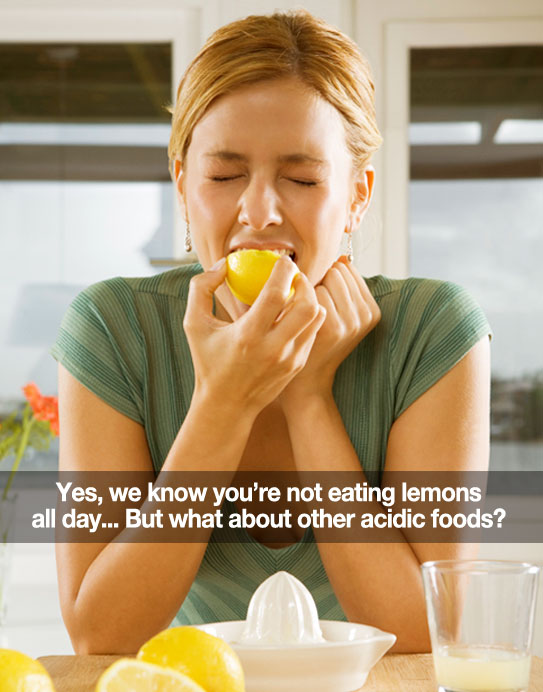
Fruits are good for you, so we don’t want to discourage you from eating them. However, you should be smart about it. Apples, peaches, and citrus fruits can all take their toll on your teeth—especially if you frequently sip on fruit juices.
4. Processed Foods
Highly processed foods often have acid added to them as preservatives. So when you buy canned, boxed, and shrink-wrapped foods, check the labels.
Minimize The Damage With Smart Habits
Acidic foods are a part of our lives, but you can minimize the damage to your teeth by swishing some water around in your mouth after downing a Coke, or eating some cheese (or other neutral food) to encourage saliva flow afterward.
If you have any questions about the effects of diet on your oral health, ask us! Comment below or on our Facebook page—we love hearing from you.
Thanks for being an awesome part of our practice. We appreciate you!
Disclaimer: The information provided in this article is for educational and informational purposes only and is not a substitute for professional medical or dental advice, diagnosis, or treatment. Always seek the advice of your dentist, periodontist, or other qualified healthcare provider with any questions you may have regarding procedures or a specific medical condition. If you are experiencing severe pain, heavy bleeding, or signs of infection following a surgical procedure, contact your dentist or emergency services immediately.